


Defining the Undefined
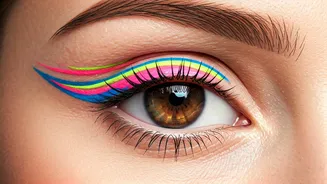
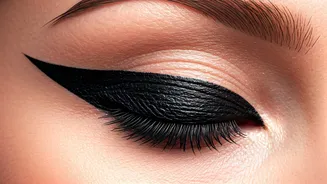
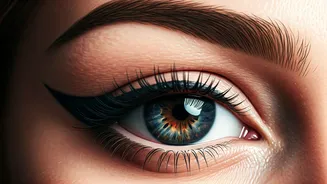
Scroll through TikTok or Instagram and you’ll see it: sharp, geometric lines floating above the crease of an eyelid; tiny, whimsical dots accentuating the outer corner of the eye; dramatic, wing-like shapes that have nothing to do with a traditional cat-eye.
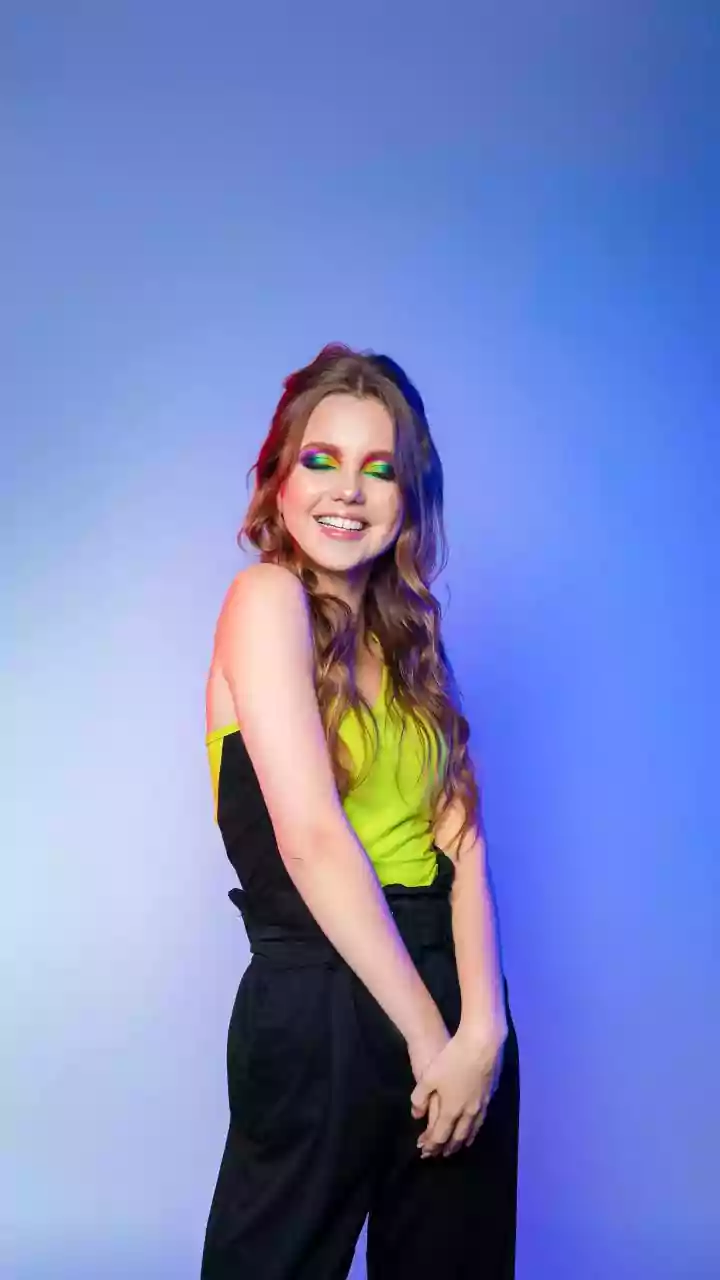
This is the world of unblended, graphic makeup. It’s less about enhancing features and more about adorning them. Think of it as turning the face into a canvas, not for a photorealistic portrait, but for abstract art. While the perfectly blended, soft-glam look popularized by YouTube tutorials of the 2010s sought a kind of airbrushed flawlessness, this new wave is all about crisp edges and intentional shapes. It’s the floating eyeliner seen on the cast of HBO’s “Euphoria,” the painterly swipes of color favored by artists like Doja Cat, and the sharp, architectural lines that transform a simple look into a statement.
A Rebellion Against Perfection
So, why the sudden shift away from blending? In many ways, it’s a direct reaction to the years-long reign of the 'Instagram Face'—a high-maintenance, algorithm-friendly look defined by heavy contouring, baked concealer, and impeccably blended eyeshadow. That aesthetic, while impressive, often promoted a singular, homogenized ideal of beauty that required significant time, skill, and product. The graphic liner trend, by contrast, feels more democratic and punk rock. It’s not about hiding imperfections but about adding something bold and personal. A single, well-placed line can be more impactful than a 20-step eyeshadow routine. It’s a rejection of the pressure to look flawlessly 'natural' and an embrace of the artificial, the artistic, and the joyfully conspicuous. It says, 'I’m not trying to trick you into thinking I was born with this—I’m showing you what I chose to create today.'
From the '60s to a Screen Near You
This isn't the first time makeup has refused to blend in. The trend has deep roots in the 1960s, when icons like Twiggy popularized the 'floating crease'—a dark line drawn in the socket to create the illusion of a larger, more doll-like eye. It was a graphic, almost cartoonish look that broke from the softer styles of the previous decade. Later, '80s club kids and New Wave artists used sharp lines and bold blocks of color as part of their rebellious, anti-establishment identities. What makes the current revival different is its digital nativity. Fueled by social media platforms that reward visual novelty, today’s graphic makeup trend is endlessly evolving. A look can go viral overnight, inspiring thousands of reinterpretations. It’s a form of creative expression that is born on screens, designed for screens, and shared on screens, allowing for a level of experimentation and rapid dissemination that past eras could only dream of.
Your Face Is the Canvas
Perhaps the most refreshing aspect of this trend is its focus on personal mood over universal rules of flattery. Traditional makeup artistry is often 'corrective,' designed to make eyes look bigger, cheekbones higher, and faces more symmetrical. Graphic makeup isn’t concerned with that. A squiggle of neon liner or a smattering of tiny pearls under the eyebrow isn’t meant to 'flatter' the face in a conventional way. Instead, it’s about expressing a feeling, completing an outfit, or simply playing with color and shape. This approach lowers the stakes. If a line is a little crooked, it looks intentional. If the wings don’t match, it’s called asymmetry. It’s a move toward seeing makeup not as a tool for achieving beauty-standard compliance, but as an accessory for self-expression, as changeable and personal as a piece of jewelry or a favorite t-shirt.