





The Land of Dawn-Lit Mountains
Tucked into the far northeastern corner of India, Arunachal Pradesh is a world away from the country’s bustling megacities and well-trodden tourist trails. Sharing borders with Bhutan, China, and Myanmar, its name translates to “Land of the Dawn-Lit Mountains,”
and the moniker is fitting. This is where the first rays of sun strike the Indian subcontinent, illuminating a landscape of staggering biodiversity. It’s a region where the high Himalayas begin their dramatic descent, transitioning into the subtropical forests of Southeast Asia. Unlike the rain-shadowed deserts of Ladakh or the alpine meadows of Nepal, Arunachal is defined by water. Specifically, the colossal power of the annual monsoon, which drenches the landscape from May to September and gives birth to its most formidable features: its rivers.
Rivers That Carve Worlds
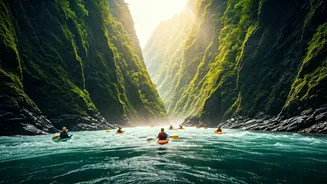
The rivers of Arunachal Pradesh are not gentle, meandering streams. They are titans. The Siang River, which is the name for the mighty Brahmaputra as it thunders down from Tibet, carves a gorge so deep and dramatic it rivals any in the world. Further east, the Dibang and Lohit rivers do the same, their turquoise waters turning a muddy, ferocious brown during the rains. For most of the year, these rivers are the lifeblood of the region, but in the monsoon, they become its architects, scouring the earth and deepening the valleys. Trekking here means living with the constant, visceral sound of roaring water. It’s a humbling soundtrack that reminds you of nature’s raw, unchecked power, a force that has shaped every cliff face, ridge, and valley around you.
The Trekker's Experience
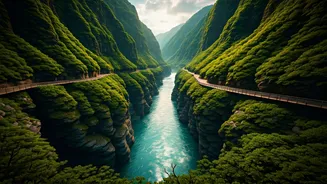
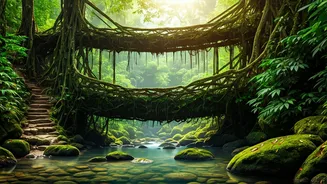
A trek in Arunachal Pradesh is an immersion. The trails don't skirt the landscape; they dive right into it. You’ll find yourself crossing long, swaying suspension bridges made of cane and bamboo, suspended precariously over a churning river below. These structures, built and maintained by local tribal communities like the Adi people, are often the only way to get from one side of a valley to the other. The paths wind through dense, emerald-green jungle, where the air is thick with humidity and the scent of wet earth. Hornbills call from the canopy, and waterfalls appear out of nowhere, cascading down moss-covered cliffs. This isn't a trek for summit-baggers seeking panoramic views from a barren peak. It's a journey into a living, breathing ecosystem, where the goal is to navigate the terrain, not just conquer it.
A Challenge Beyond Altitude
Experienced trekkers accustomed to the challenges of high altitude—thin air, cold, and acclimatization schedules—will find a completely different set of obstacles here. In Arunachal’s gorges, the primary challenge is the environment itself. The humidity is relentless, the trails can be a slick morass of mud, and the jungle is famously home to leeches. But for the dedicated adventurer, these difficulties are part of the authentic experience. It’s a more primal form of trekking, one that requires resilience, adaptability, and a good pair of waterproof boots. The reward is a profound sense of solitude and discovery. You are not one of a thousand hikers on a popular circuit; you are a visitor in a land that feels ancient, powerful, and largely untouched by the modern world.
The Permit and the Path
This feeling of isolation is, in part, by design. As a region with a sensitive border and unique indigenous cultures, Arunachal Pradesh is protected. Foreign travelers require a Protected Area Permit (PAP) to enter, a process typically handled by a registered tour operator. This isn't a mere bureaucratic hurdle; it’s a gatekeeper that ensures tourism remains low-impact and sustainable. It preserves the pristine environment and the unique ways of life of the dozens of distinct tribes who call these valleys home. Getting the permit makes the journey feel earned, adding a layer of exclusivity to an adventure that is already far from ordinary. It’s a small price to pay for access to one of the planet’s last great wild places.