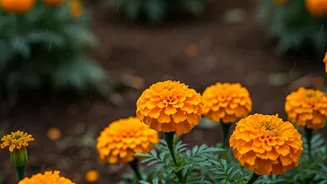









An Anchor Against Erosion
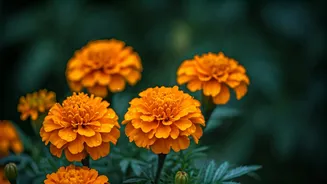
One of the most immediate threats from a heavy deluge is soil erosion. Sheets of rain can strip away precious topsoil, exposing roots and carrying away vital nutrients. This is where the marigold’s first heroic act comes into play. Beneath its sunny blooms,
the marigold develops a dense, fibrous root system that acts like a natural net, binding soil particles together. When planted as a border or intermingled with vegetables and other ornamentals, these roots create a strong, stable soil structure. Instead of turning into a muddy river, your garden bed is better equipped to absorb the water slowly, holding its ground against the onslaught of a summer storm. This simple structural support is a game-changer for maintaining the long-term health and integrity of your garden beds.
A Natural Pest Patrol
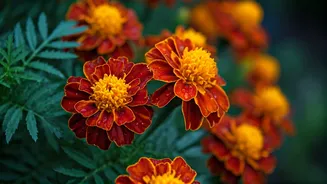
Wet, warm weather is a breeding ground for pests, especially those living in the soil. Chief among these villains are root-knot nematodes, microscopic roundworms that feed on plant roots, causing stunted growth, wilting, and overall decline. Here, certain types of marigolds, particularly French marigolds (Tagetes patula), deploy a powerful form of biological warfare. They release a biochemical into the soil that is toxic to these destructive nematodes, effectively cleansing the ground where they grow. Planting marigolds a season ahead of a susceptible crop like tomatoes or peppers can significantly reduce nematode populations. This makes them not just a pretty face, but a strategic tool for managing one of gardening’s most persistent invisible threats, which often get worse in damp conditions.
Welcoming the Good Guys
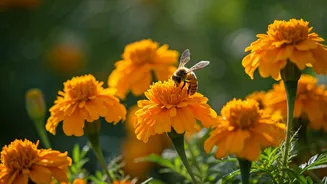
A resilient garden relies on a healthy ecosystem, and marigolds are expert community builders. Their bright, open-faced blooms are an open invitation to a host of beneficial insects. Ladybugs, lacewings, hoverflies, and parasitic wasps are all drawn to marigolds. These helpful predators are your garden's private security force, preying on destructive pests like aphids, mites, and whiteflies that can proliferate in the humid aftermath of a heavy rain. By providing a reliable food source (pollen and nectar) for these beneficials, marigolds help you build a standing army of pest controllers, reducing the need for chemical sprays and creating a more balanced, self-regulating garden environment. More good bugs mean fewer bad bugs, a simple equation that pays huge dividends.
A Hardy, Low-Maintenance Shield
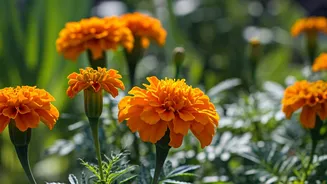
In the chaotic environment of a garden hit by unpredictable weather, you need plants you can count on. Marigolds are famously tough and adaptable. They tolerate a wide range of soil types, thrive in full sun, and are generally unfussy. While they can handle significant rainfall, it's important to note they don't like to sit in standing water. Their resilience lies in their ability to bounce back quickly. Their sturdy stems resist being flattened by wind and rain, and their continuous blooming habit means that even if a few flowers are damaged, more are always on the way. This inherent toughness makes them an ideal choice for a low-maintenance, defensive planting strategy. They fill gaps, provide continuous color, and perform their heroic duties without demanding much in return.
Tips for Planting with Purpose
To get the most out of your marigolds, a little strategy goes a long way. For nematode control, choose French marigold varieties and plant them densely. To create an effective border against soil erosion, plant a tight row of marigolds along the edges of raised beds or on sloped areas of your garden. Interplanting—the practice of mixing marigolds in with your vegetable crops—is an excellent way to confuse pests and attract beneficial insects right where you need them. They work especially well with tomatoes, peppers, squash, and cucumbers. Don't be afraid to use them generously; more marigolds mean more protection and more vibrant, season-long color.