






What Exactly Is Rath Yatra?
Rath Yatra, which translates to “Chariot Journey,” is one of the oldest and most significant Hindu festivals in the world. It’s an annual procession centered on Lord Jagannath, a form of the deity Vishnu, along with his elder brother Balabhadra and younger
sister Subhadra. For a few days each year, the deities leave the sanctum of their revered home, the 12th-century Jagannath Temple, to travel to their aunt’s temple, the Gundicha Temple, about two miles away. This journey isn't made in a car or on foot. Instead, the gods ride in three colossal, newly built wooden chariots, pulled not by engines or animals, but by the sheer force of hundreds of thousands of devotees. The festival is a rare occasion when the deities, normally housed within the temple and accessible primarily to Hindus, are brought into the open for everyone, regardless of caste or creed, to see.
The Stars of the Show: The Chariots
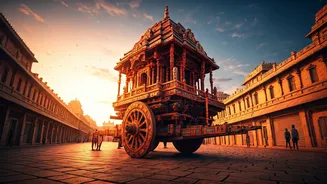
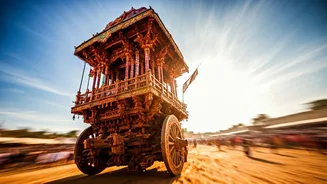
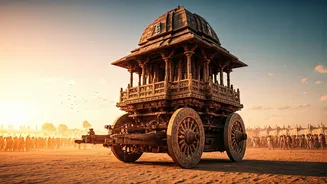
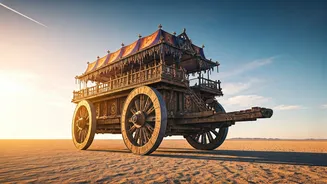
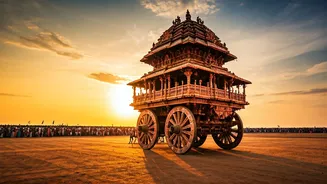
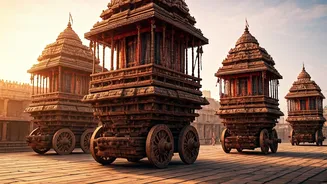
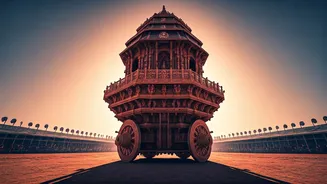
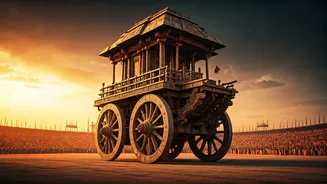
The chariots themselves are marvels of temporary architecture and sacred engineering. Every year, a special team of carpenters builds them from scratch using traditional methods passed down through generations, without a single modern blueprint. Lord Jagannath’s chariot, Nandighosa, stands roughly 44 feet tall, with 16 massive wheels, and is draped in vibrant red and yellow cloth. His brother Balabhadra’s chariot, Taladhwaja, is covered in red and green, while their sister Subhadra’s chariot, Darpadalana, is cloaked in red and black. The construction process, known as Akshaya Tritiya, begins months in advance and is a ritual in itself. Once completed, these towering, ornate structures become the temporary, mobile temples for the deities, turning the main street of Puri, the Bada Danda, into a grand ceremonial pathway.
A Spectacle of Unparalleled Faith
The core of the Rath Yatra experience is participation. The thick, heavy ropes attached to the chariots are grabbed by a throng of devotees who believe that pulling the divine chariots is an act of immense piety that can wash away sins. The energy is electric. The air fills with the sounds of gongs, conch shells, and the chanting of millions of voices. It’s a sensory overload in the most spiritual sense—a mix of procession, pilgrimage, and public celebration. For the nine days that the deities reside at the Gundicha Temple, Puri is alive with cultural programs, religious feasts, and a fair-like atmosphere before the return journey, known as the Bahuda Yatra, takes place.
Why This Year’s Turnout Is Massive
While Rath Yatra always draws a large crowd, recent years have seen fluctuations due to global events. Following restrictions during the COVID-19 pandemic which limited public participation, the full-scale return of the festival has been met with enormous enthusiasm. For many, it represents a spiritual reunion and a return to normalcy. Officials in the state of Odisha prepare for months, anticipating anywhere from one to two million people converging on the small city. They deploy massive security details, set up health camps, and manage logistics on an epic scale to accommodate the pilgrimage. This year, the anticipated turnout reflects a deep, pent-up desire for community and spiritual connection after a period of separation, making the event more poignant than ever.