



Recycled Glass: The Jewel of the Kitchen
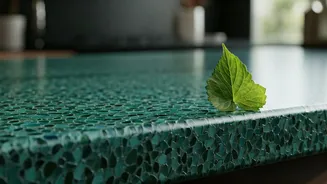
Imagine a countertop that glitters with the history of hundreds of bottles of wine, beer, and soda. That’s the beauty of recycled glass. These slabs are made by mixing crushed, post-consumer and post-industrial glass fragments into a cement or resin binder.
Brands like Vetrazzo and IceStone have turned this process into an art form, creating surfaces that are truly one-of-a-kind. Each piece tells a story, with colorful flecks of glass suspended like jewels in a smooth, polished surface. **The Green Cred:** The primary benefit is diverting massive amounts of glass from landfills. Depending on the manufacturer, these countertops can contain up to 85% recycled content. Many are produced in the U.S. using low-impact manufacturing processes. **The Reality Check:** Recycled glass counters are beautiful but not indestructible. The cement-based versions need to be sealed regularly to prevent staining, much like marble or granite. While durable, they can be susceptible to chipping or cracking from a sharp impact. They also sit at the higher end of the price spectrum, often comparable to high-end natural stone.
Paper Composite: The Warm Minimalist
Countertops made of paper? It sounds unlikely, but paper composite materials from companies like PaperStone and Richlite are gaining a devoted following. They are manufactured by compressing layers of recycled paper or paper from sustainably managed forests with a non-petroleum-based resin. The result is an incredibly dense, durable, and surprisingly warm material with a soft, matte finish that develops a rich patina over time. **The Green Cred:** These materials are often made from FSC-certified paper and petroleum-free resins. They are VOC-free, meaning they don't off-gas harmful chemicals into your home. At the end of their long life, they are also biodegradable, a rarity in the countertop world. **The Reality Check:** While heat resistant up to 350°F, you shouldn't place hot pans directly on the surface. It’s also not scratch-proof; while minor scratches can often be buffed out with an abrasive pad and some oil, deeper cuts are permanent. The material is non-porous but can be stained by acidic foods if they aren't wiped up quickly.
Reclaimed Wood: Rustic and Rescued
Butcher block has always been a charming choice, but reclaimed wood takes its eco-credentials to another level. Sourced from old barns, factories, bowling alleys, or gymnasiums, this wood comes with built-in character and history. It offers a warmth and texture that stone can’t match, making a kitchen feel instantly more inviting. Each knot, grain pattern, and nail hole tells a story of its previous life. **The Green Cred:** Using reclaimed wood is the ultimate form of recycling. It prevents beautiful, old-growth timber from ending up in a landfill and reduces the demand for newly harvested trees. It’s a perfect fit for the circular economy. **The Reality Check:** Wood is wood. It requires significant maintenance, including regular sealing with mineral oil to prevent it from drying out, cracking, or absorbing bacteria. It’s susceptible to scratches, water damage, and heat marks. While many homeowners embrace the evolving patina of a well-loved wood counter, those seeking a pristine, maintenance-free surface should look elsewhere.
Bamboo: The Speedy Impostor
Often mistaken for wood, bamboo is actually a type of fast-growing grass. This makes it a highly renewable resource—some species can grow several feet in a single day and are ready for harvest in just a few years, compared to the decades it takes for hardwood trees to mature. Bamboo countertops are constructed by laminating strips of bamboo together, creating a look that’s modern, clean, and similar to maple. **The Green Cred:** Its rapid growth and ability to be harvested without killing the plant system make bamboo a superstar of sustainability. Look for products made with formaldehyde-free adhesives to ensure the best indoor air quality. **The Reality Check:** Bamboo is relatively soft compared to other materials on this list. It can scratch and dent more easily than hardwood, let alone stone. Like wood, it’s not impervious to water or heat damage and requires careful maintenance and sealing. Its durability is highly dependent on the quality of manufacturing and the adhesives used.