




The Great Indian Beverage Battle
For generations, the rhythm of Indian life has been punctuated by steaming cups of chai. From the roadside 'chai wallah' serving spiced tea in tiny clay cups to the pot brewing in every family kitchen, tea has been the undisputed social and cultural beverage
of the subcontinent. It’s a drink of hospitality, of business deals, of political debate, and of quiet contemplation. The idea of coffee making significant inroads has long seemed unlikely, with its consumption largely confined to the southern states where it's grown, and the instant-powder variety found in homes. But a seismic shift is underway, concentrated in the gleaming commercial hubs of Mumbai, Delhi, Bengaluru, and beyond. This isn't your grandmother's filter kaapi. A new wave of coffee culture is taking hold, and it has little to do with tradition and everything to do with a modern, globalized identity.
Enter the 'Third Wave' Cafe
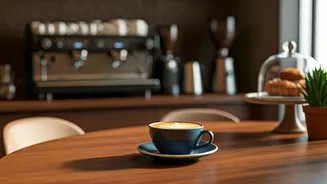
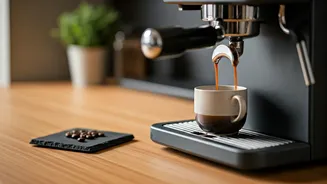
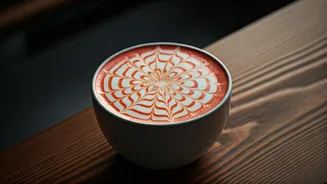
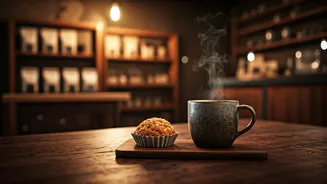
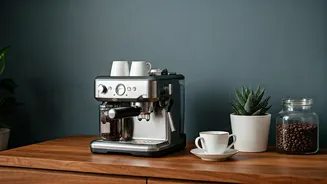
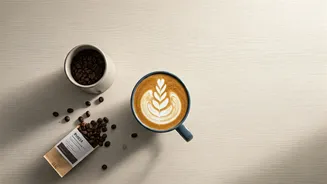
The engine of this change is the 'third wave' coffee shop. Chains like Blue Tokai Coffee Roasters, Third Wave Coffee, and Araku Coffee are rapidly expanding, creating spaces that feel more like they belong in Brooklyn or Melbourne than in traditional India. These are not just places to get a caffeine hit; they are destinations. The interiors are a study in minimalist chic: exposed brick, polished concrete, blond wood, and abundant natural light. The focus is squarely on the 'aesthetic.' Baristas, now seen as skilled artisans, craft intricate latte art atop perfectly poured flat whites and cortados. The coffee itself is single-origin, ethically sourced from Indian estates, and roasted in-house. The entire experience is curated to be photogenic, from the ceramic mugs to the artfully arranged pastries. This visual appeal is crucial, as the primary audience for these cafes is India's burgeoning population of millennials and Gen Z, for whom an experience isn't truly complete until it's been posted on Instagram.
More Than a Drink, It's a Statement
While the quality of the coffee is important, the trend's explosion is fueled by deeper social and economic currents. For India's upwardly mobile urban youth, a ₹400 (about $5) cappuccino is an accessible status symbol. It signifies that you are modern, well-traveled (even if just digitally), and part of a global conversation. These cafes function as 'third spaces'—neutral, comfortable zones away from home and the office where young professionals can work on laptops, conduct meetings, or go on dates, all within a setting that reflects their aspirations. This movement coincides with a rise in disposable income and a desire for premium, experiential consumption. After years of seeing Western coffee culture depicted in movies and TV shows, this generation is now able to afford and customize that lifestyle for itself. Ordering a pour-over is not just about preferring a specific flavor profile; it's about performing a certain kind of cosmopolitan identity.
Is Chai's Reign Over?
It’s crucial to contextualize this trend. While 'aesthetic coffee' is indeed becoming a new ritual for a certain slice of the population, it is by no means displacing chai on a national level. India is a country of 1.4 billion people, and for the vast majority, chai remains the affordable, accessible, and emotionally resonant drink of choice. The specialty coffee scene is almost exclusively an urban, upper-middle-class phenomenon. What we are seeing is not a replacement but an addition. It represents a growing cultural and economic bifurcation. As one part of India holds fast to tradition, another, younger and more affluent, eagerly embraces global trends. The quiet hum of a designer coffee shop and the boisterous call of a street-side chai vendor can now exist on the same city block, each serving a different India.