


The Rise of Premium Fast-Casual
Let’s get one thing straight: this isn’t your parents’ fast food. The ascendant American chain restaurant of the 2020s belongs to a category often dubbed “premium fast-casual” or “fast-casual 2.0.” It’s a space occupied by brands that blend the speed
and convenience of a Chipotle with the aesthetic and ingredient-consciousness of a local farm-to-table bistro. They offer customization, but within a tightly curated framework. The interiors are clean, modern, and built for Instagram. The food is fresh, often with a healthy halo. Most importantly, they deliver a consistent, high-quality experience whether you’re in Austin, Texas, or Albany, New York. For a generation of diners raised on the internet and accustomed to curated digital feeds, these brands offer a reliable, real-world equivalent.
Example A: The Cava Conquest
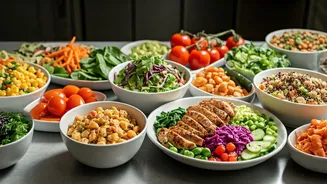
If there’s a poster child for this movement, it’s Cava. The Mediterranean concept, with its vibrant bowls of hummus, spicy harissa, and grilled proteins, has exploded in popularity. Its model is brilliantly simple: an assembly line where customers build their own meal from a colorful array of fresh toppings and sauces. After acquiring its struggling rival, Zoës Kitchen, in 2018, Cava embarked on a massive conversion and expansion plan, rapidly planting its flag in suburban shopping centers and urban food halls nationwide. The appeal for young foodies is obvious. It feels healthier than a burger, more exciting than a sandwich, and offers a seemingly endless combination of flavors. It’s affordable luxury you can eat in your car.
Example B: Sweetgreen’s Salad Supremacy
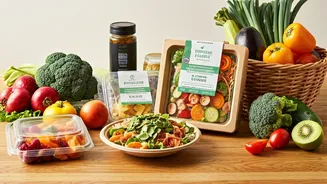
While Cava conquered the grain bowl, Sweetgreen cornered the market on the upscale salad. Founded with a mission to connect people to real food, Sweetgreen built its brand on sourcing from local farmers (where possible) and a tech-forward approach. Its app is a masterclass in frictionless ordering, making it dangerously easy to drop $18 on a kale Caesar salad. For a health-conscious, time-poor demographic, Sweetgreen isn't just lunch; it's a lifestyle choice. It’s the official meal of “I have a 1 p.m. meeting” and “I just left a spin class.” By creating a cult-like following in major cities and then expanding its footprint, Sweetgreen proved that a salad could be not just a meal, but an aspirational brand.
Example C: The Raising Cane’s Phenomenon
It’s not just about health food. Look at the meteoric rise of Raising Cane’s. Their menu is the polar opposite of customizable: chicken fingers, fries, coleslaw, Texas toast, and a signature sauce. That’s it. But in its extreme simplicity lies its genius. By focusing on doing one thing perfectly, Cane’s has cultivated a fanatical following, especially among Gen Z. The lines of cars clogging drive-thrus are a testament to its success. The appeal here is pure, unadulterated reliability. You know exactly what you’re getting, and it’s always good. It’s the ultimate comfort food, delivered with ruthless efficiency and a brand voice that feels authentic and fun.
The Secret Sauce: Consistency Is The New Authenticity
So, why is this happening now? For years, food culture celebrated the unique, the local, the “authentic” hole-in-the-wall. But for younger diners navigating a world of endless choice and potential disappointment, consistency has become its own form of authenticity. A trusted multi-state brand is a safe bet. It’s an experience you can count on, which is a powerful draw in an uncertain world. These chains are also masters of social media. Their food is photogenic, their locations are recognizable, and being a “regular” signals you’re part of a modern, in-the-know tribe. They’ve cracked the code on providing a curated, shareable, and delicious experience that feels personal, even when it’s replicated in a thousand locations.