







1. Prep Your Vehicle Before the Storm
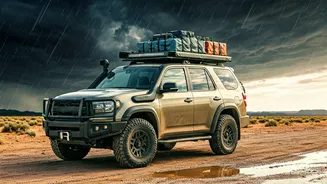
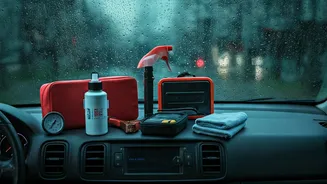
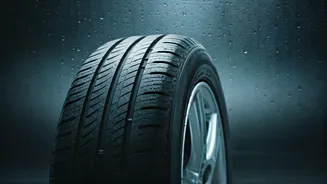
The best way to handle a monsoon storm is to be ready before you even turn the key. The most critical components are your tires, wipers, and lights. Check your tire pressure and tread depth. Worn tires are a primary cause of hydroplaning on slick roads.
Your tread is designed to channel water away from the tire's surface, and if it's too shallow, you'll be riding on a thin film of water with no control. Next, inspect your windshield wipers. The intense sun and dry heat of the Southwest can bake the rubber, causing it to crack and become ineffective right when you need it most. Replace them at the start of the season. Finally, walk around your car and ensure all your lights—headlights, taillights, and turn signals—are working. Visibility drops to near zero in a downpour, and being seen by other drivers is just as important as seeing the road.
2. Don't 'Outdrive' the Rain
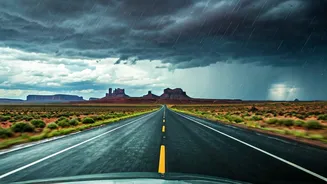
The single most common mistake drivers make is maintaining their normal speed. When rain first starts, it mixes with oil, grease, and dust on the road, creating a dangerously slick surface. Reducing your speed by a third is a good rule of thumb; if the speed limit is 60 mph, aim for 40 mph or less. This isn't just about caution—it's about physics. Slower speeds give your tires a better chance to maintain contact with the pavement. It also dramatically increases your reaction time. Double or even triple your normal following distance. In a heavy downpour, the car in front of you can become a blurry set of taillights. Giving yourself a buffer of five or six seconds, instead of the usual two or three, provides the space you need to react to sudden stops or hazards hidden by the rain.
3. Know the Dust Storm Protocol: Pull Aside, Stay Alive
Monsoons often begin with a haboob—a massive, rolling wall of dust that can engulf a highway in seconds, reducing visibility to zero. If you see one approaching, do not try to drive through it. The Arizona Department of Transportation's 'Pull Aside, Stay Alive' campaign provides clear, life-saving instructions. Pull your vehicle as far off the road as possible. Turn off all of your lights, including your headlights and emergency flashers. This is crucial because if you leave your lights on, other drivers might mistake your taillights for the road and rear-end you. After turning off the lights, set the emergency brake, take your foot off the brake pedal (so your brake lights are off), and stay in your vehicle with your seatbelt on. Wait for the storm to pass completely.
4. Never Underestimate a Flooded Wash
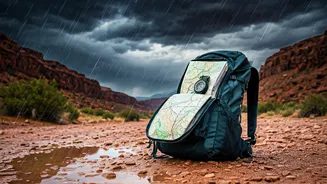
The phrase 'Turn Around, Don't Drown' is a national campaign for a reason, and it's especially critical during monsoon season. The dry washes and low-lying areas that are empty 364 days a year can become raging torrents in minutes. It is impossible to judge the depth or current of moving water from your driver's seat. A mere six inches of fast-moving water can knock over an adult, and just 12 inches can sweep away a small car. Two feet of rushing water can carry away most vehicles, including SUVs and trucks. The road beneath the water may be washed out completely. The risk is never worth it. If you encounter a flooded roadway, stop, turn around, and find an alternate route, even if it means a significant delay.
5. Master the Art of Hydroplaning Recovery
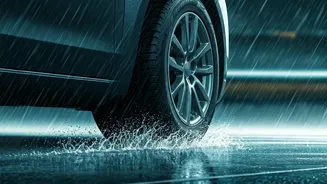
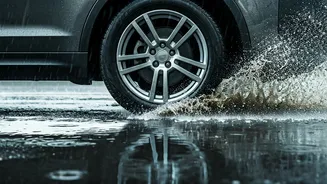
Hydroplaning is the terrifying sensation of your car floating or skidding across the water's surface. It happens when your tires can't disperse water fast enough, losing contact with the road. If it happens, your instincts will scream at you to slam on the brakes and jerk the wheel. Do the opposite. Immediately take your foot off the accelerator. Do not brake and do not make any sudden turns. Grip the wheel firmly but look and steer gently in the direction you want the car to go. As the car slows, the tires should regain contact with the pavement. A gentle touch is key; any abrupt action can send the car into an uncontrolled spin.