
The Deconstructed Classic
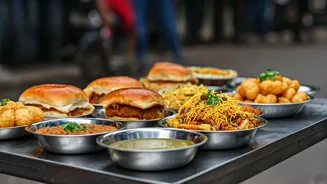
Let’s start with the pani puri. In its classic street-food form, it’s a perfect edible vessel: a crisp, hollow puri filled with spiced potatoes and chickpeas, then dunked in tangy, herby water. You pop the whole thing in your mouth for an explosion of
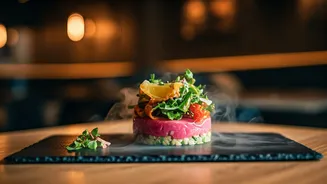
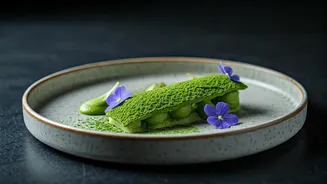
flavor and texture. It is unimprovable. Portal, in its quest for novelty, serves its version deconstructed. You get the elements—a delicate sphere, a dropper of spiced water, a smear of chutney—and are invited to admire the technique. The flavors are there, technically, but the soul is gone. The singular, joyful moment of the crunch and rush of liquid is replaced by a polite, almost clinical, appreciation of components. It's an intellectual exercise, not a snack. You’ve experienced an idea about pani puri, but you haven’t actually *eaten* pani puri in the way that matters.
When Ideas Get in the Way
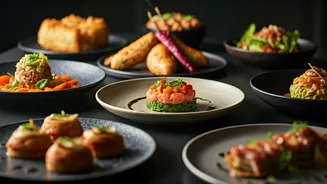
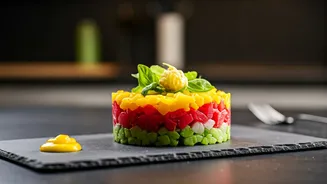
This pattern of intellectualizing comfort food repeats across the menu. Dishes that have been perfected over generations, balanced for maximum satisfaction, are pulled apart and reassembled into something less than the sum of their parts. A classic lamb rogan josh, known for its deep, rich, slow-cooked gravy, might reappear as a perfectly cooked lamb loin with a 'rogan josh foam' and a 'spiced soil.' It’s culinary pointillism. From a distance, it looks like the picture, but up close, it’s just a series of disconnected dots. The ambition is palpable, and the technical skill is undeniable. The chefs are clearly talented artists. But sometimes, you don't want to admire art; you want to eat dinner. You want the deep, bone-warming comfort of a stew that has been allowed to be itself, not forced to perform a modernist interpretation of its own identity.
The Novelty Hangover
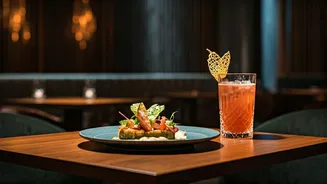
The feeling leaving Portal is one of profound respect mixed with a distinct lack of desire. You respect the effort, the creativity, the sheer audacity of trying to reinvent some of the world's most beloved dishes. You’ll tell your friends about the 'samosa scallops'—potato and pea puree seared like seafood—and they’ll be intrigued. You'll have a great story about the meal that was more like a science experiment. And this is the core of 'try-it-once' energy. The experience is memorable for its novelty, not its deliciousness. It's a great first date spot, where the food provides conversation starters. But will you be dreaming of that deconstructed biryani on a rainy Tuesday? Will you crave a dropper of tamarind water when you’re hungry? Probably not. The experience doesn’t create a memory your palate wants to relive.
Credit Where It's Due
To be clear, this is not a condemnation of the restaurant. The service is likely impeccable, the ingredients top-notch, and the cocktails are probably fantastic. There is a place for this kind of dining. It pushes boundaries and forces us to reconsider what food can be. Some elements are probably sublime—a perfectly spiced lamb chop, a surprising flavor combination in a chutney that actually works. Without restaurants like Portal, the dining scene would stagnate. It's a necessary laboratory for culinary evolution. But a laboratory is a place you visit for a tour, not a place you go for a hug. The menu at Portal is a fascinating, important exhibition. It’s just not a place you call home.