





Meet the Trailblazers: The Artemis II Crew
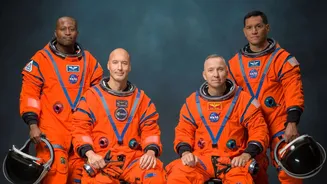
While the world waits for the Artemis III crew announcement, NASA has already given us a preview of the caliber of talent we can expect by naming the four astronauts for Artemis II, a lunar flyby mission that will pave the way. This crew represents a blend
of veteran experience and groundbreaking firsts. Leading the mission is Commander Reid Wiseman, a seasoned naval aviator and former chief of the astronaut office. He's joined by Pilot Victor Glover, an F/A-18 pilot who will be the first person of color to fly around the Moon. Mission Specialist Christina Koch holds the record for the longest single spaceflight by a woman, bringing invaluable long-duration experience. Rounding out the crew is Canadian Space Agency astronaut Jeremy Hansen, a former fighter pilot, representing the international partnership crucial to the Artemis program. Their mission will test the Orion spacecraft’s life-support systems on a trip beyond the Moon, making them the first humans to venture that far since the Apollo era.
The Historic Promise of Artemis III
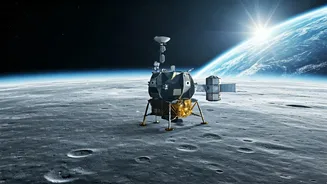
The stakes for Artemis III, currently slated for no earlier than 2026, are even higher. This isn't just a flyby; it’s the landing. This mission is tasked with landing two astronauts on the lunar surface near the Moon's south pole, a region yet to be explored by humans and believed to be rich in water ice. The significance goes beyond science and technology. NASA has explicitly committed that the Artemis III crew will include the first woman and the first person of color to walk on the Moon. This is a deliberate and powerful statement, signaling that this new era of space exploration reflects the diversity of the nation driving it. The crew selection, therefore, is about more than just piloting skill; it’s about choosing the faces that will inspire the next generation and define humanity’s return to a celestial body for decades to come.
Who's In the Running?
So, who could be on that historic flight? The final crew will be chosen from NASA's active corps of Artemis astronauts, a group of highly accomplished individuals from diverse backgrounds. This talent pool includes seasoned veterans and recent graduates of astronaut training, all of whom are eligible for selection. The list of contenders is a who's who of modern excellence. You have figures like Jessica Meir, a marine biologist who conducted the first all-female spacewalk alongside Christina Koch. There's Raja Chari, an Air Force colonel and test pilot who recently commanded the SpaceX Crew-3 mission. Other names frequently mentioned in speculation include astronauts like Anne McClain, an army aviator and mechanical engineer, and Matthew Dominick, another decorated naval test pilot. The selection process is famously opaque, weighing factors like technical expertise, specific mission needs, and the intricate puzzle of crew synergy. Any of the approximately 40 active astronauts could theoretically be in consideration.
The 'Right Stuff' for a New Era
What it takes to be an astronaut in the 21st century has evolved dramatically since the Mercury Seven. While the 'Right Stuff'—nerves of steel and elite piloting skills—is still essential, the requirements for an Artemis astronaut are far broader. Today’s astronauts are also world-class scientists, engineers, and doctors. On the lunar surface, they won't just be planting a flag; they will be conducting complex geological surveys, deploying scientific instruments, and troubleshooting advanced technology in the most hostile environment imaginable. Teamwork and psychological resilience are paramount. The Artemis III crew will spend weeks together in the tight confines of the Orion spacecraft before two of them descend to the surface. NASA looks for individuals who are not only leaders but also exceptional followers and, most importantly, good roommates under extreme pressure. They must be communicators, capable of conveying the wonder and importance of their mission to a global audience, serving as ambassadors for science and exploration.