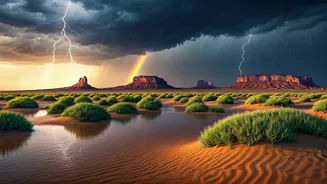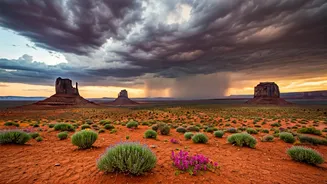





The Scent of Desert Rain
The first magic to arrive is the scent. It’s a fragrance so primal and yearned-for in arid lands that it has its own name: petrichor. Before the first raindrop even hits the ground, you can smell the storm coming. This earthy perfume is an invisible cocktail
of chemical compounds. During long dry spells, desert plants secrete oils that accumulate in the soil and on the sand. At the same time, certain soil-dwelling bacteria produce a compound called geosmin. When rain finally arrives, the impact of the drops on the porous, dry surface traps tiny air bubbles. These bubbles shoot upwards, bursting as tiny aerosols and releasing a fragrant plume of those plant oils and geosmin into the air. In a desert, where the soil is parched and the flora is sparse but resilient, this scent is exceptionally sharp and clean—a profound announcement that the world is about to be renewed.
A World Washed in New Colors
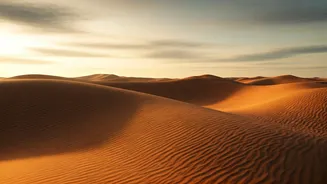
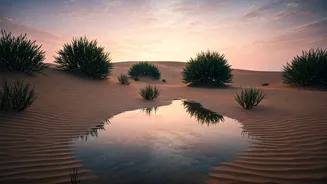
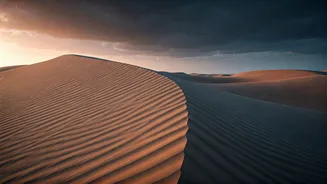
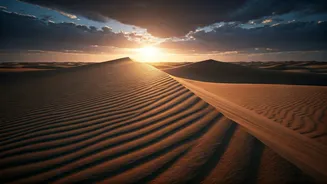
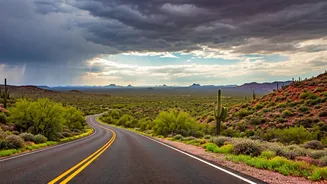
As the shower passes through, a visual transformation unfolds. The once-glaring, sun-bleached expanse of the dunes darkens to a rich tapestry of ochre, tan, and deep caramel. The water saturates the top layer of sand, absorbing light instead of reflecting it. This change instantly dials down the harsh glare, allowing the eye to rest and perceive a depth of color that was previously invisible. The subtle contours and wind-carved ripples of the dunes become more defined, outlined by moisture. If the rain is heavy enough, tiny, ephemeral pools may form in the low-lying areas between dunes, creating fleeting mirrors that reflect the dramatic, cloud-strewn sky. For a few precious moments, the monotone desert becomes a landscape of profound contrast, its soft shapes and saturated colors feeling more like a watercolor painting than a real place.
The Dune’s New Skin
The feeling of the world underfoot changes completely. Dry, loose sand can be a challenge to traverse; each step sinks, a constant, sliding struggle. But a brief, gentle rain works a quiet miracle. The water acts as a binding agent, the surface tension between the water molecules and sand grains locking them together. The dune’s surface becomes firm, almost solid, a temporary crust that can bear weight. Suddenly, you can walk across the sand with ease, leaving behind crisp, perfect footprints that seem etched into the landscape. This new firmness turns the dune into a canvas. Every track left by a scurrying lizard, every delicate imprint of a bird’s landing, is preserved with startling clarity. The rain doesn't erase the dune's story; it provides a fresh page on which new, temporary tales can be written, a tactile shift that makes you feel more connected to the ground you walk on.
A Fleeting, Vibrant Awakening
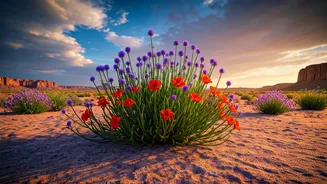
The magic of a desert rain isn't just sensory; it's biological. The shower is a powerful trigger, a life-giving signal that rouses a dormant world. For a brief period, the landscape buzzes with an energy it lacked just an hour before. Tucked away in the sand, spadefoot toads, which can lie dormant for months or even years, may emerge for a frantic, short-lived breeding cycle. Seeds of desert wildflowers, coated in a growth-inhibiting substance that only rain can wash away, might begin the process of germination. Insects like the darkling beetle, often hidden from the sun's heat, may venture out onto the damp sand. This burst of activity is as ephemeral as the rain itself. It’s a frantic, beautiful rush of life taking advantage of a rare opportunity, a reminder that even in the most seemingly barren places, life is always waiting for its chance to flourish.