



The Valley That Wakes From Winter
Deep in the Chamoli district of Uttarakhand, a state in northern India known as “Devbhumi” (Land of the Gods), lies the Valley of Flowers National Park. A UNESCO World Heritage Site, this alpine meadow is less a single trail and more an ethereal destination.
For about eight months of the year, it’s an inaccessible world of white, locked away by heavy snowfall. But when the headline announces its “return,” it signals a magical, annual transformation. From roughly June through October, the snows recede, and the valley floor erupts with life, revealing a landscape so vibrant it feels painted. This seasonal rebirth is what makes its return an annual event for trekkers and nature lovers worldwide.
Justifying ‘Most Photogenic’
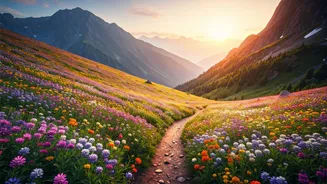
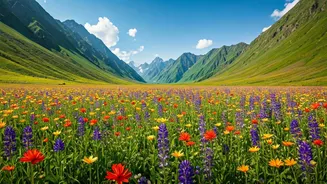
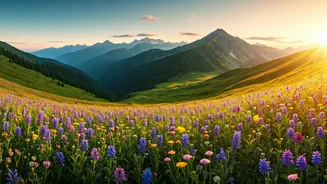
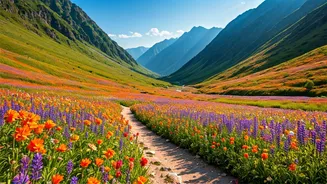
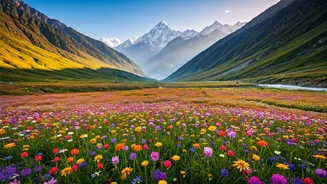
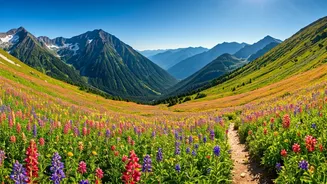
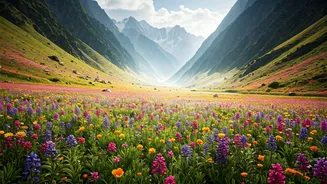
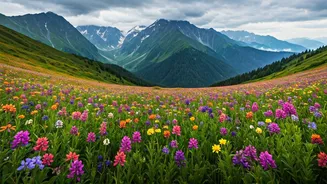
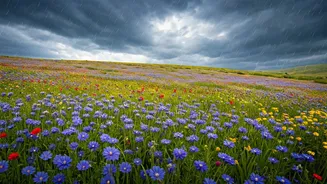
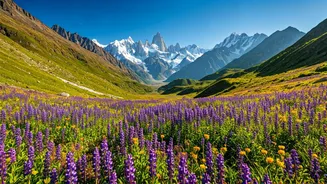
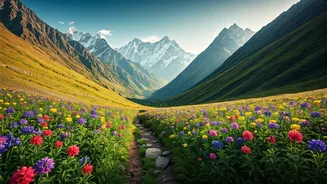
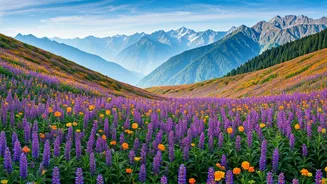
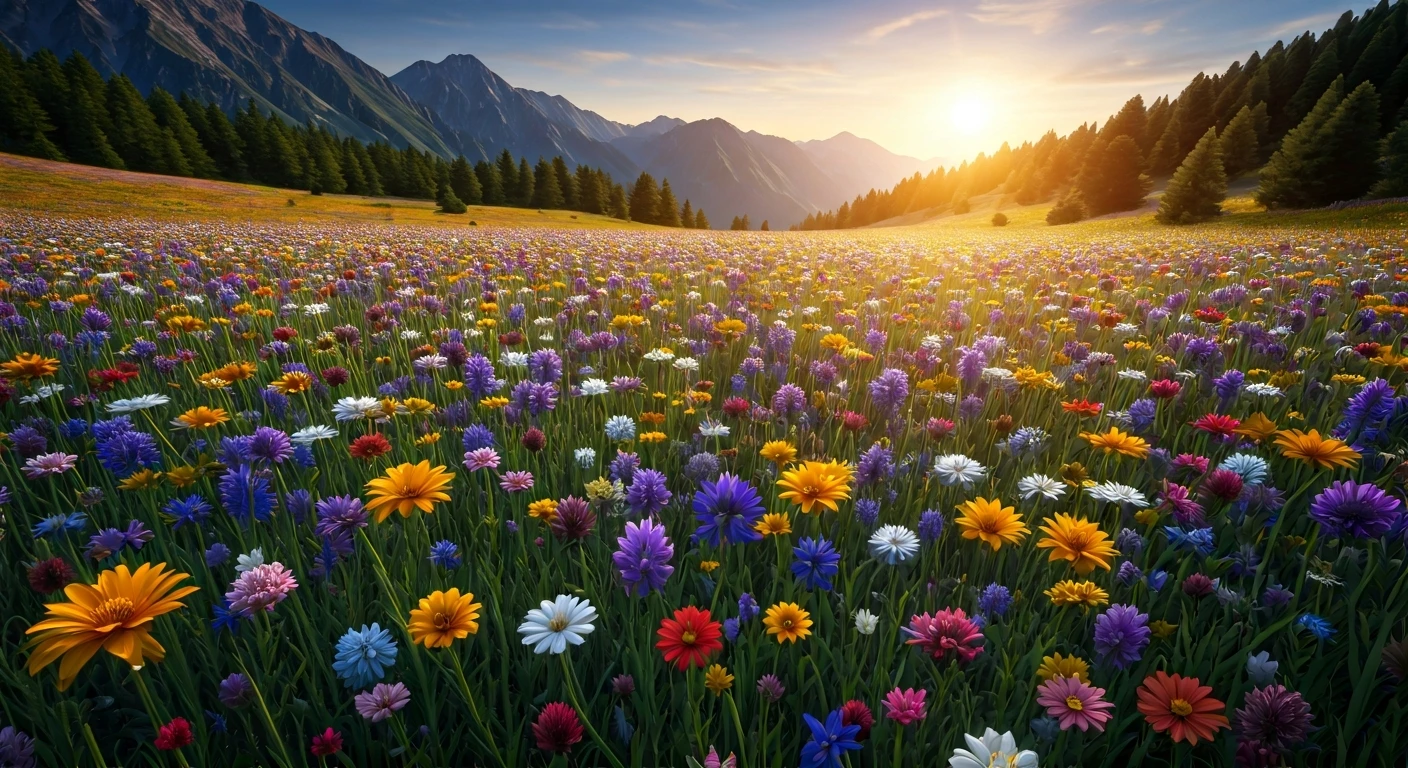
Calling any location the “most photogenic” is a bold claim, but the Valley of Flowers makes a compelling case. The spectacle isn't just one type of flower, but a staggering collection of over 500 species of alpine flora. Picture acres of wild roses, geraniums, and primulas creating a carpet of pink, purple, and yellow. This soft, colorful foreground is set against a dramatic backdrop of jagged, snow-dusted Himalayan peaks, including the formidable Rataban and Nilgiri Parbat. Waterfalls cascade down rocky cliffs, and the Pushpawati River, a clear mountain stream, meanders through the heart of it all. It’s a place of intense contrasts: delicate petals against harsh rock, vivid colors against monochrome snow. For a photographer, every angle offers a new, breathtaking composition.
The Hunt for the Blue Poppy
Among the valley’s many treasures, none is as legendary as the Himalayan blue poppy (Meconopsis aculeata). This elusive, electric-blue flower is the holy grail for many visitors. Finding one feels like a genuine discovery, a reward for making the journey. But it’s not alone in its unique beauty. The valley is also home to the rare Brahma Kamal, a saucer-like flower that blooms at night, and the sinister-looking cobra lily. The sheer biodiversity means that the valley’s appearance changes almost weekly. A visit in July will offer a different palette of colors and blooms than a visit in late August, giving travelers a unique, time-stamped experience of this high-altitude ecosystem.
The Journey Is Part of the Story
Reaching this remote paradise is an adventure in itself. The trek is generally considered moderate in difficulty, accessible to anyone with a reasonable level of fitness, but it’s no walk in the park. The journey typically begins from the small village of Govindghat, following a path that runs alongside the gushing Alaknanda River to the base camp at Ghangaria. This route is shared by another set of travelers: Sikh pilgrims on their way to Hemkund Sahib, a revered high-altitude gurdwara (Sikh temple) located beside a glacial lake. This confluence of nature trekkers and spiritual pilgrims creates a unique atmosphere on the trail—a shared sense of purpose and reverence, whether for God, nature, or both. From Ghangaria, a separate, flower-lined path leads you into the core zone of the Valley of Flowers, where you are finally greeted by the sweeping meadows.
What to Know Before You Go
If you’re inspired to see this natural wonder, timing is everything. The absolute best time for peak floral bloom is from mid-July to mid-August. You'll need an entry permit, which can be obtained at the forest department checkpoint at the valley's entrance. Accommodations are available at the base camp village of Ghangaria, but they are basic, so manage your expectations. Prepare for unpredictable mountain weather by packing layers, waterproof gear, and sturdy hiking boots. Most importantly, remember that this is a fragile ecosystem. Stick to the marked trails, pack out everything you pack in, and leave the flowers for the next visitor to marvel at.