





1. Inspect Your Tires for Grip
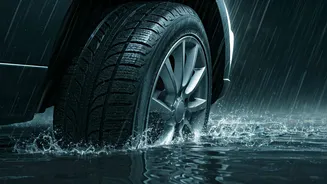
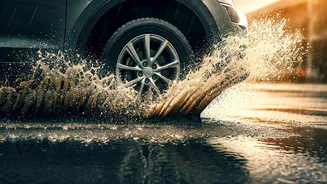
Your tires are the only part of your car that actually touches the road, and when that road is suddenly slick with rainwater, their condition is paramount. Monsoon downpours can create ideal conditions for hydroplaning, where your vehicle loses traction
and essentially skates on a thin layer of water. To prevent this, your tires need adequate tread depth to channel water away effectively. The classic 'penny test' is a reliable way to check this: insert a penny into the tread groove with Lincoln's head upside down. If you can see all of his head, your tread is worn below the safe limit of 2/32 of an inch, and it's time for new tires. Also, check your tire pressure. Both under-inflated and over-inflated tires can reduce traction and handling, especially in wet conditions. The correct pressure is listed on a sticker inside your driver's side door jamb, not on the tire itself.
2. Replace Your Wiper Blades and Fluid
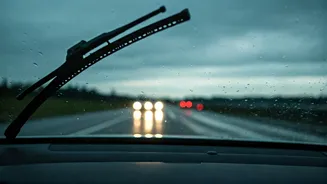
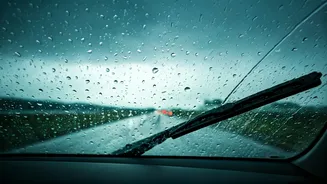
Windshield wipers that have been baked under the intense desert sun for months are often brittle, cracked, and ineffective. You don’t want to discover this during the first torrential downpour of the season. A good rule of thumb is to replace your wiper blades every six to twelve months, or as soon as you notice streaking, skipping, or chattering. For monsoon season, investing in a quality pair of beam-style blades can make a significant difference, as they apply more uniform pressure to the windshield. Just as important is your wiper fluid. Top it off with a formula designed to break down dirt and bugs. The first rain after a long dry spell often kicks up an oily, grimy film from the road, and a pre-monsoon dust storm (or haboob) can leave a thick layer of mud on your windshield. You’ll need a full reservoir and effective wipers to maintain visibility.
3. Check Your Lights and Battery
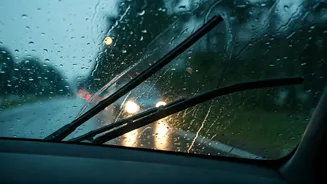
Monsoon storms can reduce visibility to near zero in an instant, making it crucial that you can see and be seen. Before the season starts, do a walk-around of your vehicle and check that all your exterior lights are working: headlights (both high and low beams), taillights, brake lights, and turn signals. Hazy or yellowed headlight lenses can severely diminish light output; use a restoration kit to clean them for maximum brightness. The monsoon season also puts a strain on your car’s battery. The extreme heat leading up to the storms can degrade battery life, and the increased use of headlights, wipers, and air conditioning during a storm demands a lot of power. Most auto parts stores offer free battery testing. If your battery is more than three years old or showing signs of weakness, getting it checked is a wise move to avoid being stranded.
4. Test Your Brakes
Your car’s braking system is your most important safety feature, and its effectiveness can be reduced on wet pavement. While you should always have your brakes inspected by a professional if you hear grinding, squealing, or feel a pulsation in the pedal, you can be mindful of their performance in daily driving. Pay attention to how much pressure you need to apply and how quickly the car responds. If the pedal feels 'spongy' or goes too far to the floor, it could indicate a problem with the brake fluid or other components. Driving through standing water can also temporarily reduce brake effectiveness until the pads and rotors dry out. After passing through a deep puddle, you can gently apply the brakes for a few seconds to help them dry. Remember, in wet conditions, it takes longer to stop. Increasing your following distance is the simplest and most effective way to compensate.
5. Build a Monsoon-Specific Emergency Kit
Getting stranded is dangerous any time of year, but monsoon season presents unique hazards, from flash floods to blinding dust storms. Your standard emergency kit needs a few seasonal upgrades. In addition to jumper cables and a first-aid kit, ensure you have: plenty of drinking water (at least one gallon per person), non-perishable snacks, a powerful flashlight with extra batteries, a phone charger or power bank, and a blanket. For monsoon-specific additions, consider a weather radio to stay updated on storm warnings if you lose cell service. A small shovel can be useful if you get stuck in mud or sand. Finally, given the risk of flash flooding, having a window-breaker/seatbelt-cutter tool easily accessible in the cabin is a crucial piece of equipment that could be life-saving. Knowing your kit is ready provides invaluable peace of mind.