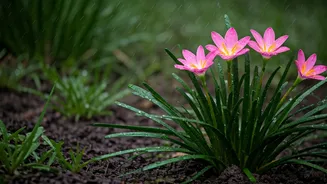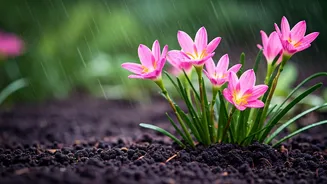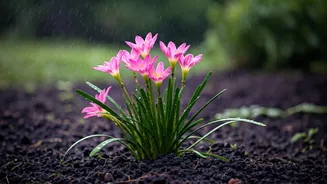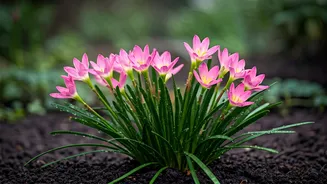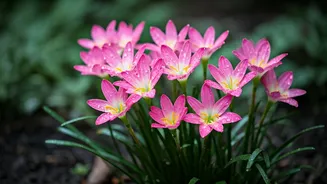







The Overnight Sensation
Meet the rain lily. Known to botanists as *Zephyranthes*, these small but mighty perennials have earned a host of charming nicknames—zephyr lily, fairy lily, storm lily—all hinting at their sudden, almost magical appearance. Found in gardens and wild
patches across the southern United States, from Florida to Texas and into the Southwest, they spend most of their time as unassuming, grass-like foliage, or completely hidden underground as bulbs. They are the patient introverts of the floral world, waiting for their one specific cue to burst onto the scene. And when that cue comes, they don't just bloom; they detonate in a synchronized show of pink, white, or yellow, transforming a mundane patch of green into a field of stars in less than 48 hours.
The Science of the Spectacle
So, how do they pull off this party trick? The 'fireworks' display is a brilliant survival strategy triggered by a very specific weather event: a heavy downpour, especially after a dry spell. The common wisdom is that the water itself is the trigger, but the science is a bit more nuanced and far more interesting. The bulbs are highly sensitive to changes in atmospheric conditions. The drop in barometric pressure that often precedes a major thunderstorm, combined with the deep soaking of the rain itself, signals to the dormant bulb that conditions are perfect for flowering and setting seed. The moisture allows the flower stalk to grow at an astonishing rate, sometimes visibly elongating over the course of a day. This rapid response ensures the flowers can take full advantage of the temporary moisture, attract pollinators, and produce seeds before the next dry period sets in. It’s not magic, but it’s the closest thing you’ll find in a garden bed.
An American Natural Wonder
While many popular garden flowers are imports, many species of rain lily are native to the Americas, including several in the U.S. In Texas, the copper-colored *Zephyranthes drummondii* can blanket entire pastures after a spring or summer storm. In Florida, the white-flowered *Zephyranthes atamasca* is a protected species that illuminates wetlands. The term 'monsoon' in the headline isn't just poetic license. In the American Southwest, the arrival of the summer monsoon season, with its dramatic and often-isolated thunderstorms, is directly linked to the blooming of local rain lily species. They are a living, beautiful barometer of a region’s most vital weather patterns. For centuries, their emergence has been a reliable, welcome sign that the life-giving rains have returned.
Your Own Personal Fireworks Show
The best part about this natural spectacle is how easy it is to bring to your own backyard. Rain lilies are famously low-maintenance. They are bulbs, after all, designed for self-sufficiency. Plant them in the fall or spring in a spot that gets plenty of sun, in soil that drains well. Once established, they require almost no care. You don't even need to water them regularly; in fact, letting them dry out between rains is what primes them for their spectacular show. They are perfect for gardeners who love surprises or for creating a 'wild' patch in a more manicured landscape. The payoff isn't a slow, steady bloom, but a sudden, joyful eruption of color that will have you running outside after every storm to see what has appeared overnight. It’s a recurring gift from the garden, courtesy of the summer sky.