






The 20 Percent Problem
It’s a uniquely modern form of travel anxiety. You’ve booked the flights, reserved the charming rental near the beach, and mentally packed your bags for a sun-drenched escape. Then, a few days out, you check the forecast. It doesn’t call for a hurricane
or a biblical deluge, but something far more insidious: a 20% chance of a stray shower on Saturday afternoon. Logically, this means there’s an 80% chance of it not raining. And yet, the doubt creeps in. Should you cancel the non-refundable boat tour? Is the whole trip a wash? Welcome to the era of the “weak rain signal,” where even the slightest possibility of imperfect weather is enough to make us reconsider our plans entirely. This isn't about avoiding genuine danger; it's about an aversion to minor inconvenience, magnified by the constant stream of data at our fingertips. The travel industry has even coined a term for its economic impact: 'forecast-induced demand destruction.'
Your Brain on a Cloudy Forecast
So, why does a small, uncertain negative feel more powerful than a large, probable positive? The answer lies in psychology, specifically a concept called “loss aversion.” Coined by psychologists Daniel Kahneman and Amos Tversky, it describes our tendency to feel the pain of a loss about twice as strongly as the pleasure of an equivalent gain. In travel terms, the potential “loss” of a perfect, sunny day due to an unexpected downpour feels far more significant than the likely “gain” of the beautiful weather that was predicted. Our brains are wired to prioritize avoiding negative outcomes. A ruined picnic or a canceled hike feels like a personal failure, a waste of precious time and money. That 20% chance of rain isn't just a statistic; it’s a direct threat to our idealized vision of the perfect trip. We fixate on the possibility of disappointment, and in an effort to control the outcome and avoid that feeling, we often opt for the most conservative choice: staying home, canceling the reservation, or scaling back our ambitions.
The Double-Edged Sword of Weather Apps
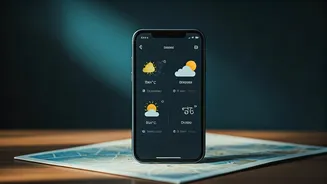
Our ancestors had to rely on almanacs, aching joints, or the behavior of farm animals to predict the weather. We have supercomputers in our pockets, delivering hyper-local, minute-by-minute forecasts. This should, in theory, empower us to make better decisions. Instead, it seems to be amplifying our anxiety. The constant access to weather data encourages a cycle of obsessive checking. We see the probability of precipitation (PoP) fluctuate from 10% to 30% and back again, turning trip planning into a high-stakes game of meteorological roulette. Furthermore, the visual language of these apps—angry-looking clouds, lightning bolt icons—can trigger an emotional response that bypasses rational thought. A simple icon for a “stray shower” can feel as ominous as a severe thunderstorm warning when it’s hovering over your vacation day. This abundance of information, rather than providing clarity, often creates a fog of uncertainty that paralyzes our decision-making.
The Economic Ripple Effect
This collective caution has a very real economic cost, especially for businesses that depend on seasonal or outdoor tourism. A beach town can see a dramatic drop in weekend visitors based on a forecast for scattered showers that never even materialize. Outdoor restaurants, concert venues, national park concession stands, and local tour operators all suffer. That 20% chance of rain might convince a family of four to cancel their trip to a coastal town, resulting in a lost hotel booking, empty restaurant seats, and unsold souvenirs. Over a season, the cumulative effect of this hesitation can be devastating for small, local economies. The irony is that in our quest to avoid the minor disappointment of a brief rain shower, we contribute to a much larger economic disruption, potentially making the places we love to visit less vibrant and sustainable in the long run.