


An Ocean Falling From The Sky
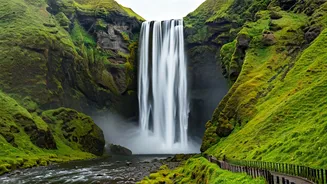
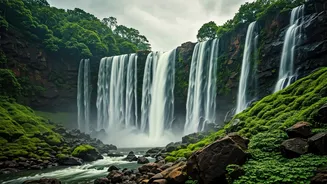
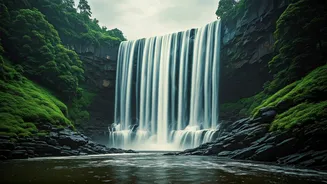
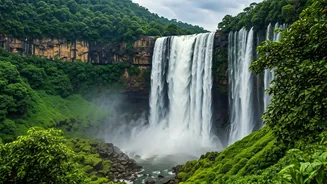
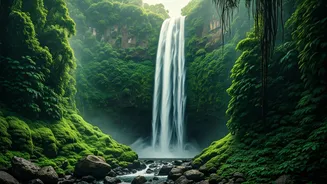
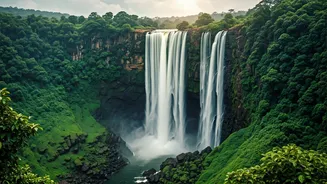
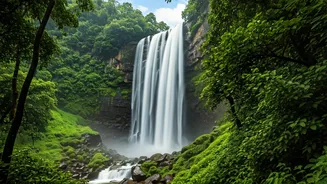
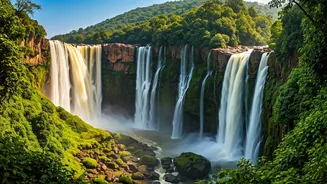
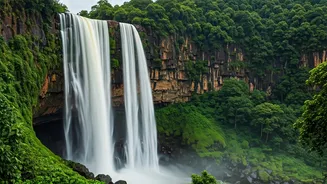
Deep within the lush, jungled sanctuary of the Western Ghats, on the border of Goa and Karnataka in India, lies a spectacle of raw natural force. Dudhsagar Falls, whose name literally translates to “Sea of Milk,” is one of India's tallest waterfalls.
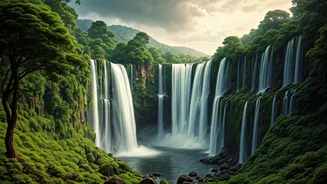
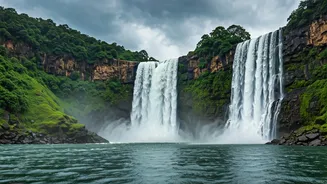
For much of the year, it’s a beautiful, multi-tiered cascade, a silver ribbon draped over a dark green cliff face. But it’s not the gentle, year-round version that earns its epic name. The true Dudhsagar is a seasonal beast, one that awakens with a fury that transforms the entire landscape. The four tiers of the falls, which drop a combined 1,017 feet, merge into a single, roaring behemoth of whitewater. The sheer volume of water atomizes into a cloud of mist that shrouds the surrounding forest, creating an ethereal, almost otherworldly atmosphere.
The Magic of the Monsoon
The secret to this transformation is timing. The Southwest Monsoon typically arrives on India’s west coast in early June. For the first few weeks, the rains soak the dry earth and begin to swell the Mandovi River, which feeds the falls. By late June and early July, the monsoon is at its peak. This is the moment the headline promises. The river, now a raging torrent, carries an immense volume of water over the precipice. The falls don’t just flow; they explode. The power is visceral. You don’t just see it; you feel the vibrations through the ground and hear the deafening roar from miles away. The milky-white appearance comes from the sheer force and aeration of the water as it crashes down, creating a churning, frothy spectacle that fully embodies its name. Visiting outside this window, particularly in the dry season, offers a completely different, and far tamer, experience.
A Journey Through The Jungle
Part of Dudhsagar’s allure is its relative inaccessibility, which preserves its wild character. You can’t simply drive up and park. The most common route during the dry and post-monsoon seasons is a bumpy, hour-long jeep safari through the dense forest of Bhagwan Mahaveer Sanctuary and Mollem National Park. However, during the peak monsoon, these jeep tracks often become impassable, flooded and muddy. This is when the most iconic and dramatic way to witness the falls comes into its own: the train. An active railway line crosses the middle of the falls on an arched stone bridge, offering one of the most staggering views in the world of rail travel. As the train slows to cross the bridge, passengers are treated to a front-row seat of the aquatic avalanche. The spray often engulfs the carriages, giving travelers a momentary, immersive baptism in the power of the Sea of Milk. It’s a fleeting but unforgettable encounter.
More Than Just Water
While the waterfall is the main event, the experience is amplified by its surroundings. The national park is a biodiversity hotspot, and the monsoon turns the jungle into a riot of impossible greens. The air is thick with the smell of wet earth and blooming flora. The journey itself is an adventure, a departure from the manicured world into something ancient and untamed. Seeing Dudhsagar at its peak is a reminder of nature’s grand cycles. It’s a spectacle not of static beauty, like a mountain peak, but of dynamic power—a temporary event that showcases the immense energy of the planet’s weather systems. It’s a force of nature performing at its dramatic, annual climax, and witnessing it feels less like sightseeing and more like bearing witness to a sacred, powerful event.