
The Psychology of Comfort
At its core, this trend is rooted in a deep, collective craving for nostalgia and security. In uncertain times, we don't reach for intimidating foams or experimental flavor pairings; we reach for what we know. A grilled cheese sandwich, a bowl of tomato
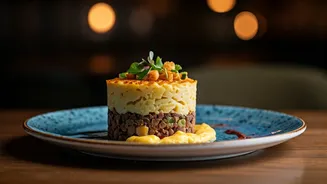
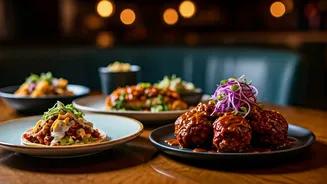
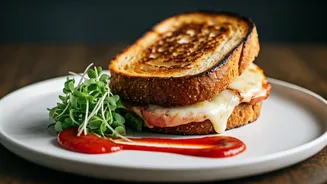
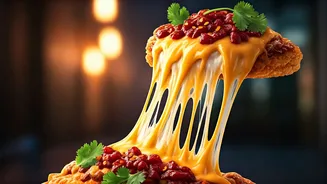
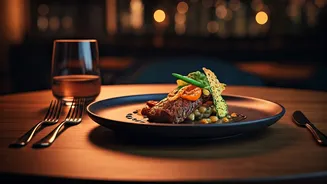
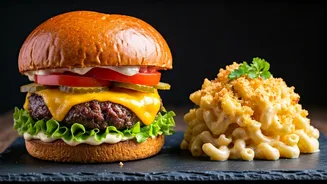
soup, or a plate of fried chicken are more than just meals; they are emotional anchors to simpler times. Restaurateurs and chefs understand this powerful psychological pull. After a period of global upheaval, diners have shown a clear preference for reliability over risk. But they also want an *experience*. Serving the same old dish the same old way feels stagnant. The solution is a clever compromise: keep the flavor profile familiar and beloved, but elevate the execution. It’s the culinary equivalent of having your cake and eating it too—you get the hug-in-a-bowl feeling of mac and cheese, but with the thrill of discovering it’s made with three artisanal cheddars and topped with herbed breadcrumbs.
Designed for the Camera
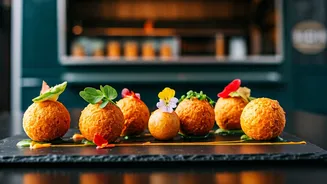
You can’t discuss modern food presentation without acknowledging the elephant in the room: the smartphone. The phrase “the camera eats first” has gone from a niche joke to a fundamental principle of restaurant menu development. A visually stunning dish is a marketing asset, generating free, user-driven advertising on platforms like Instagram and TikTok. A perfectly symmetrical burger, cross-sectioned to show its juicy pink center and dripping sauce, is engineered for virality. A simple plate of pasta becomes a star with a dramatic swirl, a sprinkle of vibrant green herbs, and a dusting of cheese that catches the light just right. This isn’t just about aesthetics; it’s a business strategy. Restaurants are designing dishes with their digital afterlife in mind. The color contrast, height, and texture are all considered to create an image that stops a user from scrolling, provokes a “wow,” and, most importantly, makes them want to taste it for themselves.
The Economics of an Upgrade
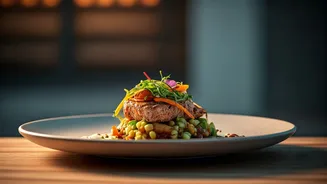
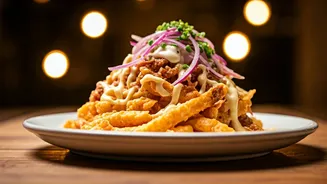
There’s also a straightforward economic calculation at play. How does a restaurant increase its profit margins on historically low-cost, high-volume dishes? By transforming them into a premium experience. The core ingredients of a burger—ground beef, bread, cheese—are relatively inexpensive. But call it a “Wagyu Smash Burger with a Toasted Brioche Bun, Aged Vermont Cheddar, and Truffle Aioli,” and you can justifiably add ten dollars to the price. The “better presentation” is a tangible signal of added value. A dollop of sauce becomes an elegant swoosh. Onions aren't just sliced; they're meticulously caramelized or crisped into delicate frizzled threads. A sprinkle of microgreens, while adding little in flavor, adds immense perceived value and signals to the diner that this isn't just any old burger—it's an *artisanal* one. This “premiumization” allows chefs to work with familiar templates while boosting revenue in a highly competitive market.
A Canvas for Creativity
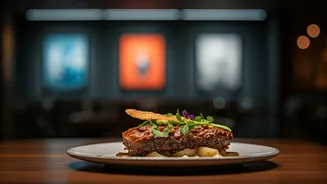
While it’s easy to be cynical and see this trend as purely a marketing or financial ploy, it also represents a genuine avenue for culinary creativity. Chefs are, at heart, artists. Being asked to make the same meatloaf day in and day out can be creatively stifling. The challenge of reinterpreting a classic allows them to flex their skills and leave a personal signature on a dish. How can you make a grilled cheese sandwich that is uniquely *yours*? Maybe it involves a custom-blend of three cheeses, bread baked in-house, and a side of tomato soup transformed into a rich, concentrated dipping jam. This approach provides a framework—the comforting promise of the familiar—within which chefs can innovate. They get to play with technique, ingredient sourcing, and plating, satisfying their own creative drive while giving customers something that is both new and deeply recognizable.