
The Everyday Hero: Homemade Dahi
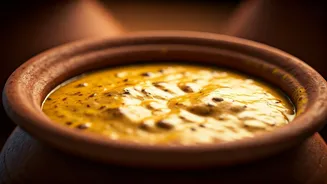
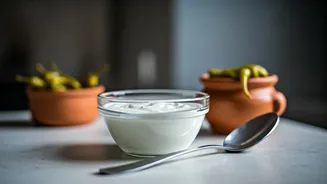
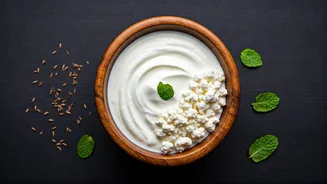
Forget the sugary, fruit-on-the-bottom cups from the grocery store. The cornerstone of Indian probiotic consumption is *dahi*, or homemade yogurt. In millions of households, making dahi is a daily ritual. A small amount of leftover yogurt from the previous
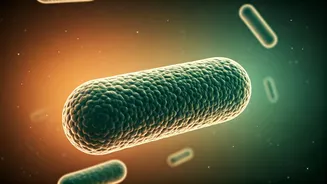
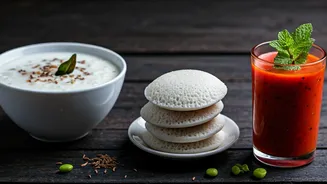
day (the starter culture, or *jaaman*) is mixed into warm milk and left to set for several hours. This simple act cultivates a complex ecosystem of live bacterial strains, like Lactobacillus. Unlike many commercial yogurts that are pasteurized after fermentation (killing the live cultures), homemade dahi is teeming with beneficial microbes. It’s eaten plain, whipped into a refreshing drink called *lassi*, or used to make *raita*, a cooling cucumber and yogurt side dish. It’s the original, everyday gut-friendly food, seamlessly integrated into meals from breakfast to dinner.
The Seasonal Super-Drink: Kanji
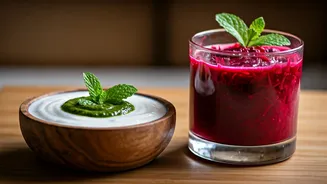
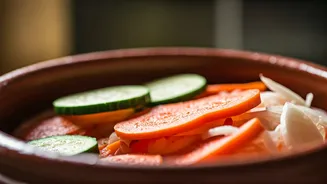
When winter arrives in North India, so does *kanji*. This unique, tangy, and deeply purple beverage is a seasonal ferment made primarily from black carrots (or sometimes beets), water, salt, and mustard seeds. The ingredients are placed in an earthenware or glass jar and left in the sun for several days. The natural yeasts and bacteria present on the carrots and in the environment kickstart lacto-fermentation, the same process that gives us sourdough and kimchi. The result is a savory, slightly pungent drink that’s fizzy with natural carbonation and loaded with probiotics. Traditionally consumed around the festival of Holi, it’s revered as a digestive aid and a body coolant, a perfect example of a food tradition designed to align with the body's seasonal needs.
The Spicy Sidekick: Achaar (Pickles)
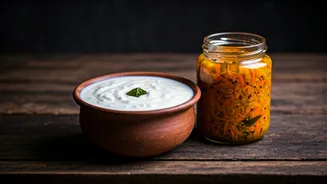
While the word 'pickle' in the U.S. almost exclusively means a pickled cucumber in a vinegar brine, Indian *achaar* is a universe of its own. Many traditional Indian pickles are not made with vinegar at all. Instead, they are preserved through lacto-fermentation. Chopped vegetables or fruits—like mango, lemon, or chili—are mixed with salt and spices and packed into jars. The salt draws water out of the produce, creating a brine in which salt-tolerant beneficial bacteria can thrive, converting sugars into lactic acid. This acid is a natural preservative that prevents spoilage while creating a complex, funky, and delicious flavor. A small spoonful of fermented mango or lemon pickle with a meal not only adds a burst of flavor but also a dose of gut-friendly microbes. The key is to look for pickles preserved in salt and oil, not vinegar.
The Fermented Foundation: Idli & Dosa Batter
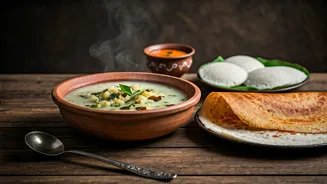
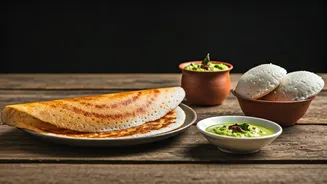
A staple breakfast in South India, *idli* (steamed rice cake) and *dosa* (a crispy crepe) are celebrated for being light, nutritious, and easy to digest. The secret is in the batter. A mixture of soaked rice and lentils is ground into a paste and left to ferment overnight at room temperature. As it sits, wild yeasts and bacteria, particularly *Leuconostoc mesenteroides* and *Lactobacillus* species, get to work. They break down the carbohydrates, making the nutrients in the grains more bioavailable and easier for our bodies to absorb. This fermentation process not only gives the idlis their fluffy texture and the dosas their signature sour tang but also enriches them with B vitamins and, of course, probiotics. It’s a brilliant 'hack' that turns a simple grain-and-lentil paste into a predigested, gut-boosting superfood.