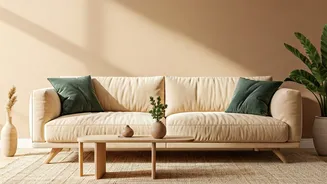




More Than Just White Walls
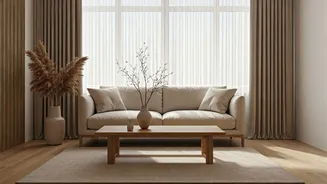
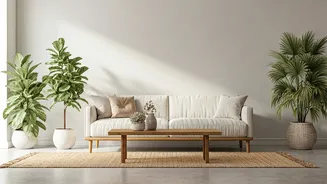
When people hear “minimalism,” they often picture a sterile, all-white room devoid of personality—a space that feels more like a gallery than a home. But the modern take on minimalism is warmer, softer, and far more personal. It’s less about stark emptiness
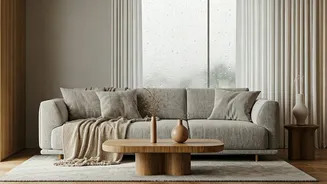
and more about thoughtful intentionality. True minimalist design isn’t about deprivation; it’s about curation. It’s the conscious decision to surround yourself only with objects that are either beautiful, functional, or deeply meaningful. This approach swaps a sea of disposable decor for a few high-quality, beloved items. Think of a well-worn wooden bowl, a single piece of art that you love, or a plush wool throw blanket. The focus shifts from quantity to quality, from accumulation to appreciation. This edited approach creates a space that feels personal and serene, where every object has earned its place and has room to breathe.
The Psychology of Calm
The comforting effect of a minimalist interior isn’t just a matter of taste; it’s rooted in psychology. Our brains are wired to process information from our surroundings, and a cluttered environment presents a constant stream of stimuli. Every object in our field of vision competes for our attention, creating a low-level cognitive load that can lead to stress and mental fatigue. Studies have shown that living in a cluttered space can even raise levels of the stress hormone cortisol. By contrast, a clean, organized space does the opposite. With fewer visual distractions, our minds are free from the constant task of sorting and processing information. This reduction in sensory input allows for a state of mental restfulness. Decision fatigue also plays a part. A minimalist home simplifies choices, from what to wear in a curated closet to which mug to use for your morning coffee. This freed-up mental energy can be redirected toward more important or creative pursuits, fostering a sense of calm and clarity.
An Antidote to Digital Chaos
It’s no coincidence that the appeal of minimalism has surged alongside the rise of our hyper-connected, digital lives. We spend our days bombarded by notifications, emails, and an endless scroll of information. Our digital spaces are overflowing with clutter. A minimalist home acts as a powerful antidote to this virtual noise. It is a physical manifestation of a “Do Not Disturb” mode. Creating an uncluttered physical environment provides a necessary counterbalance to the chaos we carry in our pockets. It’s a tangible way to log off and reset. In this context, the empty space in a minimalist room is not a void; it’s a luxury. It’s visual silence. It’s an invitation for your mind to wander without being prompted by a screen or an advertisement. A simple, well-ordered home becomes a sanctuary where you can disconnect from the demands of the digital world and reconnect with yourself.
Comfort in Control and Intention
In a world that often feels overwhelming and unpredictable, our homes are one of the few domains where we can exercise a real sense of control. The act of decluttering and curating a minimalist interior is an empowering one. It’s a process of making deliberate choices about what adds value to your life and what doesn’t. This act of choosing—of deciding what stays and what goes—is a powerful form of self-expression and agency. Each item you keep represents a conscious decision, reinforcing your values and priorities. This creates a home that is not just a collection of possessions, but a reflection of your identity and what you hold dear. This sense of control and purpose is deeply comforting. It’s the feeling that, at least within these four walls, you are the editor of your own life, capable of creating order, beauty, and peace for yourself.