



You’re Walking Through History
The main draw of Uzbekistan is its starring role in the history of the Silk Road. This isn't a country with a few old buildings; it has entire city-museums that feel like stepping onto a movie set. The core itinerary for most backpackers connects three
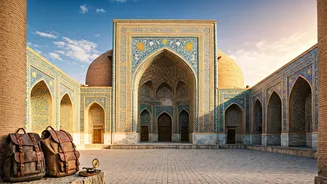
legendary hubs: Samarkand, Bukhara, and Khiva. In Samarkand, you’ll find the Registan, a public square flanked by three colossal, mosaic-covered madrassas (Islamic schools) that will recalibrate your definition of 'grand.' In Bukhara, the entire old city is a UNESCO World Heritage site, a labyrinth of sandy alleyways, turquoise domes, and bustling market stalls that has barely changed in centuries. And Khiva’s walled inner city, Itchan Kala, is a perfectly preserved fortress town where you can walk the ancient ramparts at sunset. It’s a level of historical immersion that feels both epic and incredibly accessible.
Your Wallet Will Thank You
Let's get to the 'budget' part of the trend. While prices for flights from the U.S. require some savvy shopping, once you land, your daily costs can be astonishingly low. A bed in a clean, friendly, and often family-run hostel can cost as little as $10-$15 a night. A hearty meal of plov (the national dish of rice, meat, and carrots), fresh bread, and tea might set you back $3-$5 at a local chaikhana (teahouse). The country's affordability is a huge part of its appeal, especially for travelers tired of spending $8 on a coffee in Western Europe. A comfortable daily budget of $30-$40 is genuinely achievable, allowing for accommodation, three meals, and entry fees to most sites. This frees you up to splurge on a beautiful hand-woven rug or a high-quality silk scarf without breaking the bank.
Getting Around Is Shockingly Easy
The idea of backpacking through Central Asia might conjure images of rough, multi-day bus journeys. Not here. In the last decade, Uzbekistan has invested heavily in a modern, high-speed rail network that connects its major tourist cities. The 'Afrosiyob' bullet train can whisk you from the capital, Tashkent, to Samarkand in about two hours, and from Samarkand to Bukhara in under 90 minutes. The trains are comfortable, punctual, and inexpensive. For travelers, this is a game-changer. It means you can cover vast distances with zero hassle, maximizing your time exploring the cities instead of losing days in transit. For a country that feels so historically remote, its infrastructure is surprisingly modern and user-friendly.
It’s Accessible and Welcoming
Uzbekistan has actively courted tourism, and it shows. For U.S. citizens, as well as nationals from dozens of other countries, the visa process has been dramatically simplified or eliminated entirely for short stays (be sure to check the latest official requirements before booking). This pivot to openness has created a palpable sense of welcome. Locals are often curious, friendly, and eager to practice their English. The tradition of hospitality is deeply ingrained in the culture, and it's not uncommon to be invited for tea or offered help by complete strangers. While it remains a conservative country, particularly outside the capital, the tourism infrastructure is well-established, and travelers generally report feeling safe and respected. It’s that perfect mix of adventure and comfort.