




A World Washed Anew
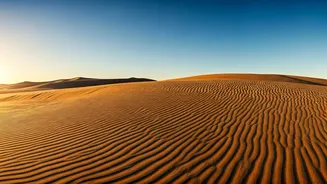
Most of us picture sand dunes as static, sun-baked behemoths, their colors bleached by the relentless midday sun. We think of heat, wind, and endless shades of pale tan. But a passing shower, even one that lasts just a few minutes, fundamentally alters
this perception. The storm washes away the dust that coats every grain, and the moisture binds the sand, holding it still. The wind dies down. A profound silence descends upon the dunes, broken only by the drip of water from a hardy desert plant. This isn't just a change in weather; it's a total sensory reset. The air feels heavy with promise, and the stage is set for a remarkable transformation that has more to do with physics than with magic, though it certainly feels like the latter.
The Science of Saturation
So, why do the dunes suddenly appear to glow? The answer lies in how light interacts with sand, both wet and dry. Dry sand is a chaotic collection of tiny, irregularly shaped mineral grains—mostly quartz and feldspar—with countless air-filled gaps between them. When sunlight hits this surface, it bounces between the grains in a scattered, diffuse way, creating a pale, washed-out appearance. But when rain falls, water fills those microscopic gaps. Instead of scattering wildly, the light penetrates deeper into the sand. The water acts as a medium that reduces the chaotic reflection and allows the inherent colors of the mineral grains to show through. The dark, iron-rich flecks of magnetite become blacker. The pinkish feldspar and golden quartz become richer and more vibrant. The overall effect is a landscape that looks darker, more saturated, and deeply lustrous, as if it’s been polished by hand.
Chasing the Golden Hour
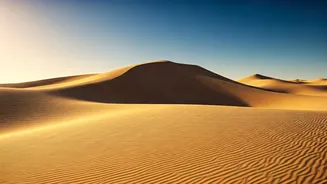
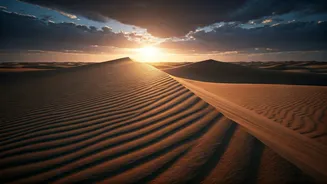
This newfound saturation is only half of the equation. The true “glow” happens when this damp, rich surface is struck by the right kind of light. During the harsh glare of midday, wet dunes simply look dark and damp. But during the “golden hours”—the first hour after sunrise and the last hour before sunset—the magic ignites. At these times, the sun is low on the horizon, casting long, warm, reddish-gold rays across the landscape. This low-angle light rakes across the curves of the dunes, illuminating the moisture-rich sand from the side. The wet surface catches this warm light and reflects it with a soft, internal luminescence. The dunes don't just reflect the light; they appear to absorb it and radiate it back, creating the illusion of a soft, internal fire. For photographers and nature lovers, this fleeting moment is the holy grail of desert beauty.
Where to Witness the Wonder
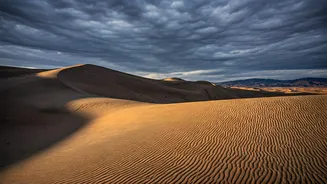
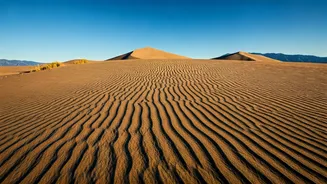
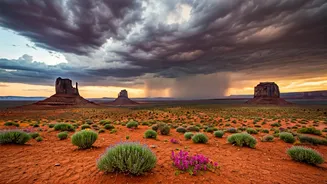
This phenomenon can occur on any sand dune, but some of America’s great dune fields are prime locations for witnessing it. At Great Sand Dunes National Park and Preserve in Colorado, summer monsoon rains often create the perfect conditions for sunset glows against the backdrop of the Sangre de Cristo Mountains. The park’s Medano Creek can leave vast stretches of sand wet and ready for the evening light show. In California’s Death Valley National Park, the Mesquite Flat Sand Dunes offer another iconic setting. Winter rain showers there are rare, but when they happen, they provide an unparalleled opportunity to see the famous dunes in a state of vibrant, glowing color that contrasts sharply with the stark, dry mountains surrounding them. Other spots, like White Sands National Park in New Mexico, offer a different version of the show, where rain can make the gypsum crystals appear almost translucent.