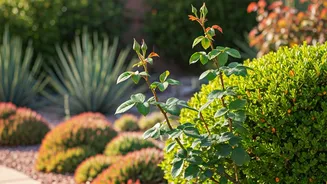







The Logic: Pruning for Rain
To understand why June pruning is so effective, you have to think like a desert plant. By late spring, plants have spent enormous energy producing flowers and leaves. As the summer heat intensifies before the monsoon, they enter a state of semi-dormancy
to conserve water, waiting for the first sign of rain. This is your moment. Pruning during this pre-monsoon period accomplishes several key goals. First, it removes weak, dead, or crossing branches that are a drain on the plant’s resources. Second, it opens up the plant’s structure, improving air circulation and, crucially, allowing monsoon winds to pass through rather than turning the canopy into a sail that could cause breakage. Finally, each cut you make is a signal to the plant, creating a site for new, vigorous growth that will erupt as soon as the humidity and rain arrive.
Timing Is Everything: The June Sweet Spot
Why June, specifically? It’s the perfect pause between the end of the spring growing season and the start of the summer monsoon, which typically begins in early to mid-July in many parts of Arizona and New Mexico. Pruning in April or May can interfere with flowering and remove energy-producing leaves just when the plant needs them most. Waiting until July or August, once the rains have started, is too late. Pruning in high humidity invites fungal and bacterial diseases to enter the fresh cuts. June offers a dry, low-humidity window that allows the cuts to “callous over” and seal themselves before the moisture-laden monsoon air arrives. This minimizes stress and disease risk, perfectly preparing the plant to capitalize on the coming water.
Who Gets the Cut? Target the Right Plants
Not every plant in your yard needs a pre-monsoon trim. Focus your efforts on deciduous native and desert-adapted trees and shrubs that will respond vigorously to the combination of pruning and rain. Prime candidates include palo verde, mesquite, desert willow, acacia, and Texas sage (Leucophyllum). These plants are hard-wired to explode with growth when summer rains hit, and your pruning will direct that energy into a stronger, healthier structure. Be more cautious with evergreens, which grow more slowly. Avoid pruning frost-sensitive plants like bougainvillea until the danger of a late cold snap has long passed. And as a general rule, leave your cacti and succulents alone; their pre-monsoon needs are different and they don’t respond to this type of pruning.
The Right Technique: Think Like a Sculptor
Good pruning is an art, but it’s guided by science. Always use sharp, clean tools to make precise cuts. For thinning, follow a branch back to its point of origin on a larger limb or the trunk, and cut it off flush without leaving a stub. This is the best way to open up the canopy. Avoid the common mistake of “lion-tailing,” where all the interior branches are stripped out, leaving foliage only at the tips of the branches. This creates a weak, unstable structure that’s prone to breaking. A good rule of thumb is to never remove more than 25% of a plant’s living canopy in a single year. Your goal is not to give the plant a severe haircut, but to selectively thin it, removing poorly placed or damaged limbs to enhance its natural form and health.
What Not to Do: Avoid Common Mistakes
The most common mistake is over-pruning. Driven by a desire to “clean up” the yard, many homeowners remove far too much material, which severely stresses the plant and can lead to sunburn on the newly exposed bark. Another error is making improper cuts, either by leaving a stub that will rot or by cutting too close to the trunk and damaging the “branch collar,” the area that contains the cells needed to heal the wound. Finally, never top your trees. Cutting off the main, upright leader to control height is a destructive practice that creates a weak, ugly, and unsafe structure. Trust the plant’s genetics and choose species that will fit the space at maturity.