

Nature's Cruel, Beautiful Deadline
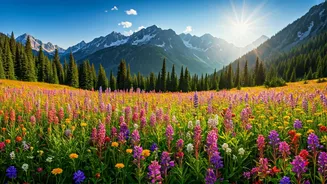
Every year, nature sets a series of magnificent, non-negotiable appointments. For a week or two, if conditions are perfect, Washington D.C.'s Tidal Basin is framed in a cloud of pink and white cherry blossoms. For a fleeting moment, a dry California hillside
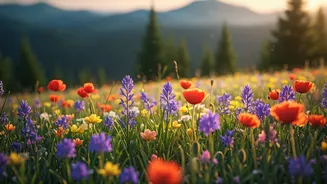
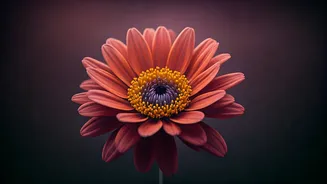
erupts into a 'superbloom' of impossible orange poppies. In Texas, entire fields turn a deep, hazy blue with bluebonnets. These are the bloom windows—intensely concentrated periods of natural beauty that are as brief as they are breathtaking. They arrive on their own schedule, dictated by winter chill, spring rain, and sunlight. And once they're gone, they're gone for another year. There's no replay button, no 'watch later.' The show is live, and the run is brutally short. This is not the manufactured scarcity of a limited-edition sneaker drop; it's the beautiful, terrifying scarcity of time itself.
The Analog Antidote to Digital Anxiety
The FOMO we've grown accustomed to is largely a digital disease. It’s born from the illusion of infinite access—a feeling that we could be everywhere, doing everything, if only we were more popular, wealthy, or organized. We see a friend’s trip to Italy and feel a pang of envy, forgetting that their perfect photo edits out the crowds, the heat, and the blisters. It’s a FOMO of comparison, driven by manufactured images. The FOMO of a bloom window is fundamentally different. It's a call to *participate*, not compare. It demands your physical presence. You can’t experience the scent of thousands of blossoms or the sight of a landscape transformed into a watercolor painting through a screen. In a world that encourages us to document and broadcast our lives, the bloom window quietly asks us to just show up and pay attention. It’s a forced mindfulness, an excuse to be present in a specific place at a specific time, with no other goal than to witness it.
Why Missing It Actually Stings
Missing a party is one thing; you can catch the highlights on Instagram. But missing a superbloom feels like a more personal failure. It’s the nagging feeling that while you were busy answering emails or getting lost in a streaming queue, the world put on a spectacular, once-a-year show without you. It’s a reminder that there is a rhythm to the world that operates completely independently of our digital lives. That pang of regret isn't about social status. It's about a missed connection to something larger, older, and more real than the latest trending topic. It's the quiet fear that we're letting the most beautiful, unrepeatable moments pass us by because we're too distracted by the infinitely repeatable ones on our screens.
A Fear Worth Having
Perhaps this is a healthier kind of FOMO. Instead of driving us toward envy and inadequacy, the fear of missing a bloom window drives us outdoors. It encourages us to check weather reports, plan a day trip, and connect with a local, tangible event. It replaces the anxiety of social exclusion with the urgency of seasonal change. It fosters a sense of community, as thousands of people gather with a shared, simple purpose: to see something beautiful before it disappears. It’s a collective appreciation, a pilgrimage to a temporary cathedral built of petals. This is a fear that doesn't diminish us; it animates us. It pushes us toward wonder, toward the present moment, and toward the humbling realization that the most memorable events are the ones that can never be perfectly captured, only experienced.