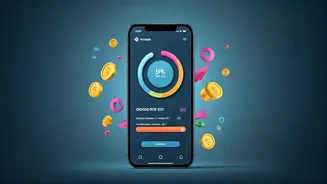







So, What Even Is ‘Fintech’?
At its core, “fintech” is simply the portmanteau of “financial technology.” It’s a catch-all term for any technology used to improve, automate, or digitize financial services. If you’ve ever paid a friend back with Venmo, checked your credit score on
your phone, or bought a fraction of a stock share through an app, you’ve used fintech. For decades, the best technology in finance was locked away inside big banks and trading firms. Fintech’s big revolution was taking that power, simplifying it, and putting it directly into the user’s hands via their smartphone. It broke the monopoly of traditional institutions, forcing them to compete on user experience, fees, and accessibility for the first time in a long time.
Your Bank Is Now an App
One of the most visible changes is the rise of neobanks—digital-only banks like Chime, Varo, and Ally. With no physical branches to maintain, these companies can pass the savings on to customers. This often translates into accounts with no monthly maintenance fees, no minimum balance requirements, and more generous interest rates on savings. They also pioneered features that traditional banks have scrambled to copy, such as getting your direct deposit up to two days early. For millions of Americans, the concept of a bank has transformed from a place you visit into an app you tap. This flexibility means your bank is always open, always in your pocket, and designed around your life, not the other way around.
Investing Is No Longer Just for Wall Street
For generations, the stock market felt like an exclusive club with a high cost of entry. You needed a broker, a hefty minimum investment, and a tolerance for confusing commission structures. Fintech blew the doors off that club. Apps like Robinhood, Acorns, and Public introduced commission-free trading and the ability to buy “fractional shares”—tiny slices of expensive stocks like Apple or Amazon for as little as a dollar. Suddenly, investing wasn't an intimidating, monolithic activity. It became something you could do with your spare change. Acorns automatically rounds up your purchases and invests the difference, making it a passive, almost invisible way to build wealth. This democratization of investing has brought a new, younger generation into the market, giving them a chance to build equity in a way that was previously out of reach.
Money That Moves as Fast as a Text
The awkwardness of splitting a dinner bill with cash or IOUs is a thing of the past. Peer-to-peer (P2P) payment apps like Zelle, Venmo, and Cash App have made transferring money as seamless as sending a text message. This has fundamentally changed our social financial interactions, smoothing out everything from paying your roommate for rent to chipping in for a coworker’s gift. On a larger scale, “Buy Now, Pay Later” (BNPL) services like Affirm and Klarna offer another form of flexibility. Integrated directly into online checkouts, they allow consumers to split large purchases into smaller, interest-free installments. It’s a modern, digital-native version of layaway that offers instant gratification with structured repayment, providing a flexible alternative to high-interest credit cards for planned purchases.
Smarter Budgeting, Automated Savings
Perhaps the most practical benefit of fintech is its ability to help us understand and manage our own financial behavior. Budgeting apps like Mint and YNAB (You Need A Budget) sync with all your accounts, automatically categorizing your spending and providing a real-time, holistic view of your financial life. They can send you alerts when you’re over budget on groceries or when a subscription fee hits. Beyond just tracking, other services like Digit and Qapital use algorithms to analyze your cash flow and automatically pull small, affordable amounts of money into a savings account. It’s a “set it and forget it” approach that helps people save money without the pain of manual transfers, making financial discipline feel effortless and future-focused.