

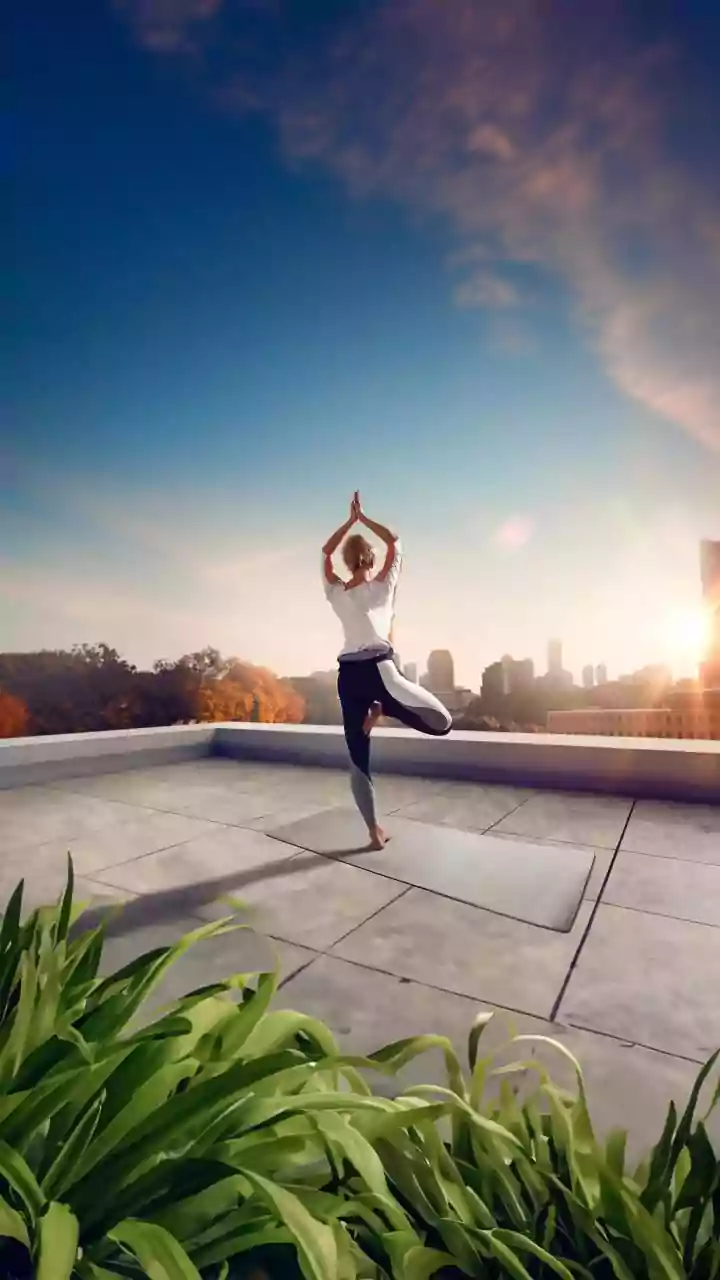







What Exactly Is Walking Yoga?
Let’s clear up a common misconception: walking yoga doesn't involve striking a tree pose on a busy sidewalk. Instead, it’s a form of active meditation that blends the core principles of yoga—mindful movement, controlled breathing (pranayama), and sensory
awareness—with the simple act of walking. Think of it as upgrading your daily walk into a restorative practice. The goal isn't to contort your body, but to synchronize your breath with your steps, tune into your surroundings with intention, and bring your racing thoughts into the present moment. It’s about transforming an automatic activity into a deliberate practice of grounding yourself, one step at a time.
Designed for the Concrete Jungle
Urban environments are a relentless sensory assault. The constant noise, visual clutter, and need for hyper-vigilance put our nervous systems on high alert. This is precisely where walking yoga thrives. It doesn’t require a silent, pristine studio or a tranquil forest. In fact, it uses the city itself as the practice space. The rhythm of the sidewalk becomes your guide. The challenge of tuning out a passing ambulance to focus on your breath strengthens your meditative muscle. Walking yoga teaches you to find a pocket of peace amidst the chaos, rather than needing to escape it entirely. It reframes your commute from a stressful necessity into an opportunity for mental clarity, turning dead time into dedicated wellness time without adding anything new to your schedule.
Your First Steps: A Simple Practice
Ready to try it? You don’t need special gear or a destination. Your next walk to the subway or grocery store is the perfect opportunity. Start by putting away your phone and taking out your headphones. 1. Find Your Foundation: Stand for a moment and feel your feet on the pavement. Notice your posture. Take a deep, cleansing breath, in through your nose and out through your mouth. 2. Sync Your Breath and Pace: As you begin walking, start to coordinate your breath with your steps. A simple pattern to begin with is inhaling for a count of four steps and exhaling for a count of four steps. Don’t force it; find a rhythm that feels natural. As you get more comfortable, you can try extending your exhale (e.g., inhaling for four steps, exhaling for six), which can have a calming effect on the nervous system. 3. Engage Your Senses Mindfully: Instead of tuning out the city, tune in with intention. Notice one thing with each of your senses. What do you see? The pattern of bricks on a building. What do you hear? The distant sound of music, separate from the traffic. What do you feel? The breeze on your skin. What do you smell? The aroma from a coffee shop. This act of intentional noticing anchors you in the present, pulling your focus away from internal anxieties.
Making It a Daily Ritual
The beauty of walking yoga is its accessibility. The key to reaping its benefits is consistency, which is easiest when you integrate it into your existing routine. Use your five-minute walk to the coffee shop as your practice. Dedicate the first half of your lunch break to a mindful loop around the block. If you walk your dog, use that time to sync your breath with your pace (and your pet’s). You can start small, with just a few minutes each day. Over time, you may find that this brief, intentional shift in awareness has a profound impact. It’s a skill that builds on itself. The more you practice finding calm on a busy street, the easier it becomes to access that calm during a stressful meeting or a crowded commute.