

The Gut Health Renaissance
It’s impossible to ignore the wellness world’s obsession with gut health. The term “microbiome” has officially escaped the lab and entered our daily lexicon, appearing on blogs, in cookbooks, and on brightly colored packaging. This new focus has propelled
a category of foods into the spotlight: probiotics. These are foods containing live microorganisms, or “good bacteria,” that are believed to support a healthy digestive system. Suddenly, fizzy, tangy, and funky-tasting foods are not just tolerated but celebrated. From kombucha bars in California to kimchi-topped hot dogs in New York, Americans are embracing fermented flavors. But while the marketing and the scientific language feel distinctly 21st-century, the foods themselves are anything but. This isn't a new invention; it's a rediscovery.
An Ancient Form of Preservation
Long before the invention of refrigerators, canning, or vacuum-sealing, our ancestors faced a fundamental problem: how to make food last. One of the most ingenious solutions they discovered was fermentation. By encouraging the growth of beneficial microorganisms, they could not only preserve vegetables, dairy, and grains through harsh winters and long journeys but also transform them. Fermentation breaks down sugars and starches, creating lactic acid, alcohol, and other compounds that act as natural preservatives. This wasn't a health-driven choice; it was a matter of survival. Every culture, from the mountains of the Caucasus to the plains of Germany and the fields of Korea, developed its own unique fermentation traditions based on local ingredients and climates. What we now call “probiotic foods” were once simply known as dinner.
A World Tour of Fermented Flavors
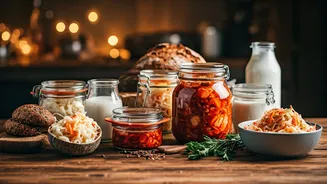
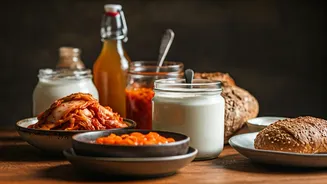
The beauty of this trend is the culinary history it brings to the table. Take kimchi, the fiery, pungent soul of Korean cuisine. For centuries, Korean families have gathered for 'gimjang,' the traditional process of making and sharing enough kimchi to last the winter. It’s a cornerstone of every meal, a symbol of community and heritage. Similarly, sauerkraut isn’t just a topping for bratwurst; it's a staple of Central and Eastern European peasant food, a way to preserve cabbage for vital nutrients during lean months. Yogurt and kefir, two of the most popular probiotic foods in the U.S., trace their origins back to nomadic tribes in Central Asia and the Middle East who discovered that milk stored in animal-skin bags would ferment into a tangy, thickened drink. Each of these foods tells a story of place, necessity, and ingenuity.
Modern Science Catches Up
So why the sudden resurgence? Modern science has finally begun to understand what our ancestors knew instinctively: these foods do something profound to our bodies. The live cultures in kimchi, kefir, and unpasteurized sauerkraut can help populate our gut with a diverse community of beneficial bacteria. Researchers are increasingly linking a healthy gut microbiome to everything from improved digestion and a stronger immune system to better mental health. While the science is still evolving, the initial findings have given consumers a compelling, evidence-based reason to embrace these ancient flavors. We’re not just eating fermented foods because they’re trendy; we’re eating them because we now have the scientific language to explain the benefits that different cultures have experienced for millennia. It's the perfect marriage of ancestral wisdom and modern validation.