




What Exactly Is Kachori Sabji?
First, let's break it down. If you've never heard of it, you're not alone—but you're in for a treat. Banarasi Kachori Sabji is a legendary street food breakfast hailing from Varanasi (also known as Banaras), one of India's oldest and most sacred cities.
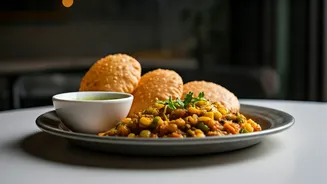
The name itself is a map. The “kachori” is a small, round, deep-fried bread that’s both flaky and crisp. Unlike a simple poori, these are typically stuffed, often with a savory, spiced mixture of lentils (like urad or moong dal) and asafoetida, giving them a uniquely pungent and addictive flavor. The “sabji” is the soulful, soupy potato curry it’s served with. This isn't your standard potato side dish; it’s a fragrant, tangy, and spicy stew, often made without onion or garlic, that perfectly complements the rich kachori. Together, they form a classic pairing of texture and flavor that has fueled generations of Northern Indians.
Anatomy of the Perfect Platter
The magic of Banarasi Kachori Sabji isn't just in its two main components, but in the way it’s served as a complete, balanced meal—which is why the platter format is so perfect. A proper serving is a symphony of flavors. You get two or three hot, puffed-up kachoris, ready to be broken open. They’re swimming in or served alongside a generous ladle of the vibrant, turmeric-hued potato sabji. But it doesn't stop there. A great platter includes supporting actors that elevate the entire experience. You'll often find a dollop of tangy tamarind chutney for sweetness, a vibrant green mint-coriander chutney for freshness, and a side of pickled carrots or spicy green chilies for a sharp kick. To complete the traditional experience, some vendors even add a warm, syrupy jalebi (a swirled, deep-fried sweet) on the side, offering a perfect sweet-and-savory contrast that hits every note.
From Varanasi Streets to American Cafes
For decades, this dish has been the domain of bustling street corners and tiny, specialist shops in India, served unceremoniously in leaf bowls and eaten while standing. Its arrival in modern, design-conscious American cafes marks a significant shift in how Indian food is perceived and presented in the U.S. It’s part of a larger movement away from the homogenized, all-you-can-eat buffet model and toward celebrating hyper-regional, specific dishes. Chefs and restaurateurs are realizing that American diners are more adventurous than ever. They’re not just looking for “curry”; they’re seeking authentic, story-rich experiences. Serving kachori sabji on a thoughtfully arranged platter in a sun-drenched cafe is a way of honoring its heritage while making it accessible to a new audience. It reframes a humble street food as the star of a weekend brunch.
Why This Dish Is Perfect for Right Now
The rise of the kachori sabji platter isn't a coincidence. It taps directly into several major modern food trends. First, it’s visually compelling. A colorful, multi-component platter is inherently Instagrammable, a crucial factor for any cafe menu’s success. Second, it delivers an explosion of complex, bold flavors that diners are increasingly craving. The combination of savory, sweet, spicy, and tangy is deeply satisfying. Third, it fits perfectly into the all-day breakfast and brunch culture. It’s hearty enough to be a full meal but feels special enough for a weekend treat. Finally, it represents the delicious intersection of authenticity and innovation. While the flavors are traditional, the presentation is modern, appealing to diners who want to explore global cuisines without leaving their neighborhood cafe. It's a delicious piece of cultural exchange, served up on a platter.