




The Old Way: Expensive and Dangerous
For generations, learning to be an engineer meant getting your hands dirty. To understand a hydraulic press, you had to stand next to one. To learn about a gas turbine, you needed access to a multi-million-dollar piece of equipment. This traditional model
has always had three major, unglamorous problems: cost, safety, and access. A top-tier university might afford one industrial robot arm for hundreds of students to share. A smaller college might not be able to afford one at all. And no matter how many safety protocols you have, putting inexperienced students near high-voltage, high-pressure, or fast-moving machinery carries inherent risks. This created a bottleneck. A student’s ability to experiment was limited by lab hours, equipment availability, and the very real possibility of breaking something incredibly expensive—or worse.
Welcome to the Digital Sandbox
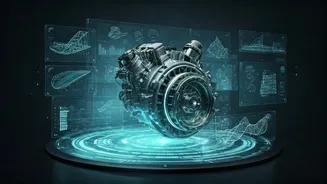
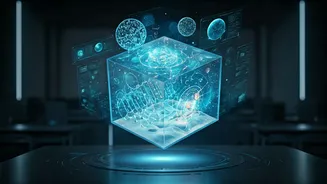
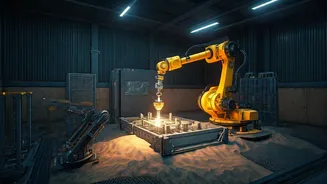
Enter the interactive 3D simulation sandbox. Forget the plastic pails and shovels of your childhood; this is a hyper-realistic digital playground for aspiring engineers. Using a combination of advanced computer-aided design (CAD) software, physics engines, and often virtual or augmented reality (VR/AR) headsets, these platforms create a “digital twin” of a real-world machine or system. Think of it as the world’s most advanced video game, where the goal isn’t to score points but to understand the intricate workings of a jet engine, a CNC mill, or an entire factory assembly line. In this virtual environment, a student can strip down a V8 engine to its last bolt, manipulate a robotic welder, or even simulate catastrophic failures to see what happens—all without leaving a classroom or dorm. It’s a space for consequence-free experimentation, which is the holy grail of effective learning.
Learning Without Limits
The benefits of this shift are transformative. The most obvious is safety. A student can simulate a high-pressure coolant leak or an electrical overload with zero risk of physical harm. The second is cost. A single software license that gives every student in a department access to dozens of virtual machines is exponentially cheaper than purchasing and maintaining even one of the physical counterparts. This democratizes access. A student at a community college can now get the same hands-on experience with a state-of-the-art turbine as a student at MIT. Furthermore, these sandboxes are available 24/7. A student who has a flash of insight at 2 a.m. can simply log in and test their hypothesis, rather than waiting for the lab to open. This allows for a deeper, more self-directed learning process where curiosity, not a schedule, dictates progress.
From Campus to Career
This isn't just an academic exercise. The skills students are building in these virtual labs are precisely what employers are looking for. Industries from aerospace to automotive to manufacturing have heavily invested in “digital twin” technology. Companies like Boeing and General Electric use complex simulations to design, test, and maintain their products before a single piece of metal is cut. When engineering graduates from programs at schools like Purdue University or Clemson—pioneers in this space—enter the workforce, they're not just familiar with the theory; they're already fluent in the digital tools that define modern industry. They can speak the language of simulation and virtual prototyping from day one, making them far more valuable hires. This alignment between education and industry practice is creating a new generation of engineers who are better prepared to tackle complex, real-world problems.