



First, What Is 'Exercise Snacking'?
Forget the gym bag and the hour-long commitment. The concept of 'exercise snacking' is simple: breaking up long periods of sitting with short, frequent bursts of physical activity. Think of it as microdosing movement throughout your day. Research suggests
these small sessions can be surprisingly effective, helping to improve blood sugar control, boost circulation, and sharpen cognitive function. Instead of one big workout 'meal,' you're having several small, energizing 'snacks' that fit seamlessly into your schedule, preventing the mental and physical slump that comes from being stationary for too long.
The Desk-Chair Power-Up
You don't even have to leave your seat for these. The goal is to awaken muscles that have gone dormant. Try these three simple moves: * **Seated Torso Twists:** Sit tall with your feet flat on the floor. Gently twist your upper body to the right, using your right hand on the back of the chair for a light stretch. Hold for 15 seconds, then repeat on the left. This helps mobilize your spine. * **Leg Extensions:** While seated, extend one leg straight out in front of you until it's parallel to the floor. Squeeze your quadriceps (the muscle on top of your thigh) for a few seconds, then lower it slowly. Do 10 reps on each leg. * **Neck Rolls and Shoulder Shrugs:** Drop your chin to your chest and slowly roll your right ear toward your right shoulder. Hold, then return to center and repeat on the other side. Follow up by shrugging your shoulders up to your ears, holding for three seconds, and releasing with a sigh. This releases tension held in the neck and traps.
The Cubicle Cardio Burst
When you have a moment to stand, use it to get your heart rate up slightly. This isn't about breaking a sweat; it's about sending a jolt of energy through your system. Find a discreet corner or head to the breakroom for these: * **Wall Sit:** Stand with your back against a wall, then slide down until your knees are bent at a 90-degree angle, as if you're sitting in an invisible chair. Hold for 30-60 seconds. This simple isometric exercise engages your glutes and quads instantly. * **Calf Raises:** Stand with your feet flat on the floor. Slowly rise up onto your tiptoes, hold for a second, and slowly lower back down. Aim for 20 reps. It's a surprisingly effective way to get blood flowing from your lower legs. * **High Knees (in place):** For 30 seconds, march in place, bringing your knees up toward your chest. Keep your core tight. It’s a low-impact way to mimic running without needing any space.
The Posture Reset Stretch
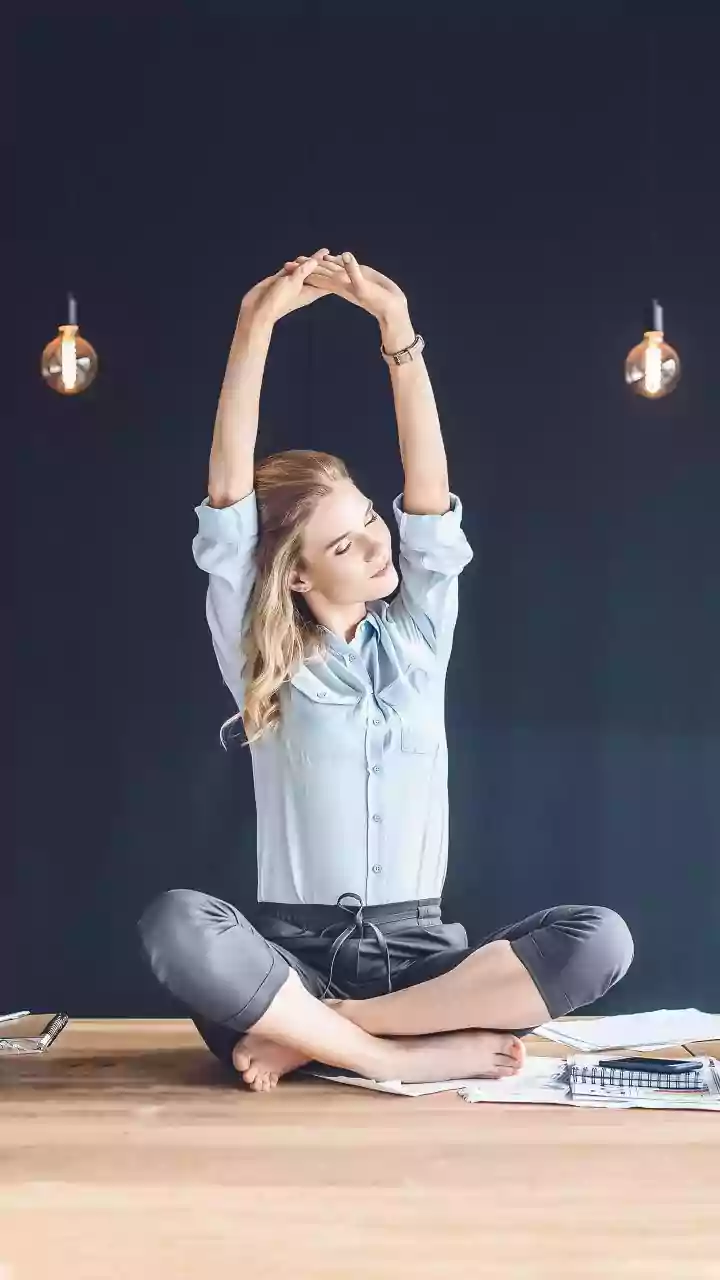
Hours of hunching over a keyboard can lead to 'tech neck' and a slumped posture, which can contribute to feelings of fatigue. Counteract this with targeted stretches that open up the front of your body. * **Doorway Chest Stretch:** Stand in a doorway and place your forearms on the frame, with your elbows bent at 90 degrees. Gently step forward with one foot until you feel a stretch across your chest and the front of your shoulders. Hold for 30 seconds. * **Wrist and Finger Stretch:** Extend one arm in front of you, palm up. With your other hand, gently pull your fingers down and back toward your body until you feel a stretch in your forearm. Hold for 20 seconds, then flip your hand so your palm faces down and repeat. This is crucial for anyone who spends all day typing.
Make It a Habit
The key to making exercise snacking work is consistency. The best way to build the habit is to link it to an existing one. For example, do a set of calf raises every time you get up to fill your water bottle. Do a few neck rolls after you send a long email. Or, go the tech route: set a recurring calendar alert or use a timer on your phone to remind you to move every 60 or 90 minutes. Start small. Even one or two 'snacks' a day is a massive improvement over none. The goal isn't perfection; it's simply to move more, more often.