

What 'Sensitive' Actually Means
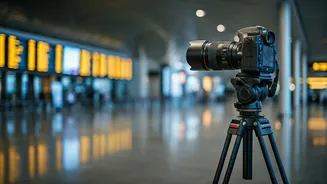
Let’s get one thing straight: most of the airport is fair game for your camera. The sprawling terminal, the food court, the gate where you’re waiting for your flight—these are generally considered public spaces where you can film your pre-departure selfie
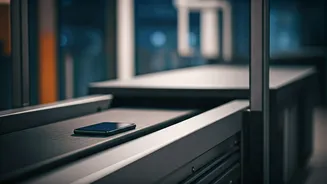
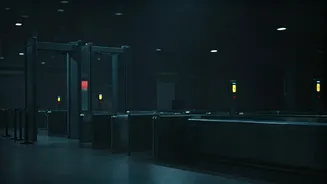
or time-lapse of planes taking off. But the rules change dramatically when you enter what authorities consider a “sensitive area.” This isn’t a conspiracy; it’s a security protocol. These zones primarily include the Transportation Security Administration (TSA) screening checkpoints and areas controlled by U.S. Customs and Border Protection (CBP). Why? Because these are the very places where security procedures, screening technologies, and law enforcement personnel are most exposed. Filming a TSA agent’s monitor, the details of a baggage screening machine, or the layout of a customs inspection area provides a potential roadmap for those looking to exploit vulnerabilities. Even if your intentions are innocent, you are documenting sensitive security information (SSI), and the people tasked with protecting it will not give you the benefit of the doubt.
Your Rights Have Practical Limits Here
But what about the First Amendment? It’s a fair question. Technically, courts have upheld the right to film in public spaces, and that often includes government officials performing their duties. However, that right is not absolute, especially in a quasi-federalized space like an airport security line. The TSA’s official policy allows for photography in and around the checkpoint, but with major caveats: you cannot film the monitors displaying X-ray images, and you cannot interfere with the screening process. “Interference” is a wonderfully vague term that gives TSA agents enormous discretion. If an agent tells you to stop filming, arguing about your constitutional rights while your shoes are in a plastic bin is a losing battle. You may be right in principle, but in practice, you’re the one who is about to miss a flight, get detained for questioning, have your devices searched, or, in a worst-case scenario, face charges. The practical reality of the situation always trumps a theoretical legal debate you’re trying to have with a uniformed officer.
The Human Cost of Clout Chasing
Beyond the legal and security risks, there’s a simple human element to consider. The airport is already a high-stress environment for millions of people. Adding a camera to the mix rarely helps. When you film at the security checkpoint, you’re not just recording TSA agents; you’re capturing fellow travelers in a moment of vulnerability—frazzled, shoeless, and just trying to get through an ordeal. They didn’t consent to be extras in your travel vlog. Furthermore, you’re creating a distraction and a potential confrontation that slows down the line for everyone behind you. That TSA agent you’re antagonizing for content is the same person who has to remain vigilant to keep everyone safe. Creating a conflict for the sake of a viral video undermines their focus and injects unnecessary tension into a process that already runs on a knife’s edge of efficiency and patience. It’s simply inconsiderate to everyone—staff and travelers alike.
The Risk vs. Reward Is All Risk
Let's do the final math. On one side, you have the potential reward: a few dozen likes, a momentarily interesting Instagram Story, or a TikTok that might get a few hundred views before disappearing into the algorithm. On the other side, you have the potential risks: being pulled out of line, getting a stern lecture, having your phone and its contents scrutinized, being questioned by federal law enforcement, receiving a fine, or even missing your flight and potentially facing arrest. There is no scenario where a short video clip is worth any of these outcomes. The “likes” are fleeting digital confetti. A conversation with a CBP officer in a back room is a very real, very stressful, and very time-consuming event that you will not forget. When you’re standing at that security line, just put the phone away. The best-case scenario is that nobody notices. The worst-case scenario is a travel nightmare from which no amount of online engagement can rescue you.