




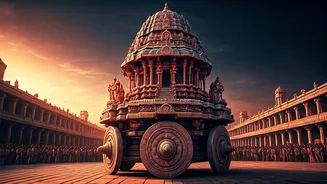


A Spectacle of Devotion
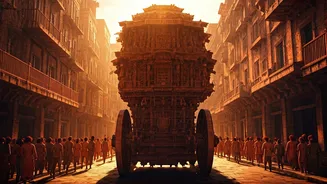
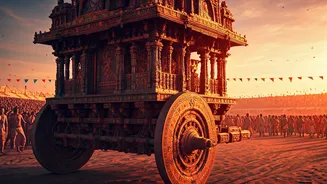
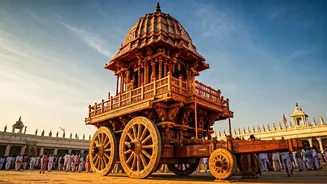
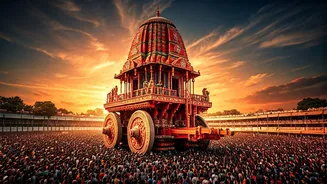
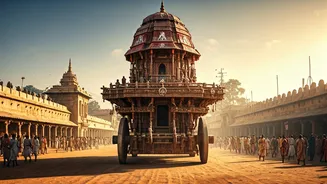
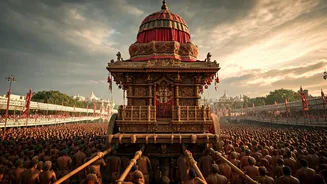
Imagine a crowd so vast it seems to stretch to the horizon, a pulsing, vibrant mass of humanity. In the middle of it all stand three colossal wooden chariots, each nearly 45 feet tall, adorned with bright fabrics and intricate carvings. This is the scene
in Puri, a coastal city in eastern India, during Rath Yatra, or the 'Festival of Chariots.' It is one of the world's oldest and largest religious congregations. The 'offline' experience is an overwhelming sensory event. The air hums with the sound of gongs, cymbals, and chants as millions of devotees, undeterred by summer heat or monsoon rains, pull the heavy chariots with thick ropes. For them, touching the ropes is an act of spiritual merit, a way to connect directly with the divine. The procession marks the annual journey of the Hindu deity Jagannath, along with his siblings Balabhadra and Subhadra, from their home temple to another nearby. It is a public display of faith so powerful and communal that it transcends religious lines, drawing participants and spectators from all walks of life.
The Sacred Craftsmanship
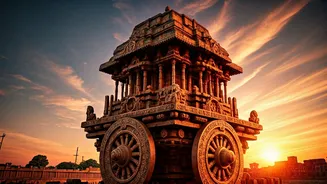
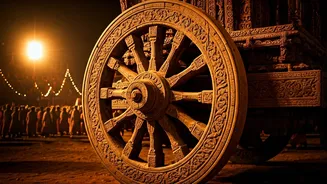
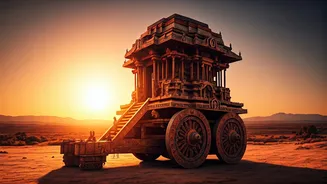
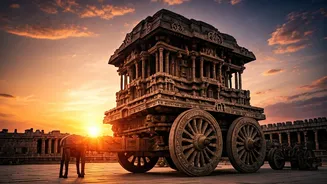
The chariots themselves are not just vehicles; they are temporary, mobile temples built anew each year with meticulous ritual precision. The construction process begins months in advance, using specific types of wood sourced from designated forests, following traditions passed down through generations of artisan families. Each chariot has a distinct design: Jagannath's, the largest, has 16 wheels and is draped in red and yellow cloth, while Balabhadra's has 14 wheels with red and green, and Subhadra's has 12 wheels with red and black. Nothing from the previous year's chariots is reused. After the festival, the wood is repurposed as fuel in the temple's massive kitchen, which feeds tens of thousands of pilgrims daily. This cycle of creation and dissolution is central to the festival's philosophy, symbolizing the transient nature of the physical world. The deities themselves, carved from wood and featuring large, round eyes, are unlike typical Hindu idols, representing a unique, tribal-influenced iconography that adds to the festival's distinct character.
The Digital Pilgrimage
While the physical gathering in Puri is staggering, an equally massive event is happening in parallel: the digital pilgrimage. This is where the 'online' following comes into play, expanding the festival’s reach far beyond India’s borders. National broadcasters and online platforms provide high-definition, multi-angle livestreams, complete with expert commentary. Millions from the Indian diaspora and a global community of followers tune in, transforming their living rooms into virtual festival grounds. Social media platforms like X (formerly Twitter), Facebook, and Instagram light up with hashtags like #RathYatra. People share photos, devotional messages, and real-time updates, creating a shared global experience. This digital participation isn't just passive viewing. It allows those who cannot make the arduous journey to feel a sense of inclusion. For an elderly person in New Jersey or a student in London, watching the chariots roll is a vital link to their cultural and spiritual heritage, a modern way to fulfill an ancient obligation.
Where Tradition Meets Technology
The fusion of ancient ritual and modern technology is what makes Rath Yatra a compelling phenomenon in the 21st century. It's a case study in how tradition doesn't have to fight modernity to survive; it can adopt it. Organizers and government bodies now use technology for crowd management, security surveillance, and public information, using apps and social media to guide the millions on the ground. The online presence has amplified the festival's global stature, turning a regional event into a worldwide cultural touchstone. Far from diluting the experience, the digital layer has arguably strengthened it. It creates a feedback loop: the stunning visuals of the offline event fuel online engagement, which in turn inspires more people to learn about the tradition or even plan a physical pilgrimage in the future. The chariot procession, a ritual that has been performed for centuries, now moves forward on two tracks: one paved with faith on the streets of Puri, the other built on fiber-optic cables circling the globe.