






The Yoga Capital Awakens
Every spring, the city of Rishikesh, nestled in the foothills of the Himalayas in northern India, undergoes a vibrant transformation. Already known as the 'Yoga Capital of the World'—a title it earned after The Beatles famously visited in 1968—the city buzzes
with a unique energy. But during the International Yoga Festival, that buzz becomes a roar. The narrow streets, normally humming with pilgrims, monks, and wandering cows, fill with a new kind of seeker: wellness enthusiasts from over 70 countries. The air, already thick with the scent of incense and the sound of temple bells, is now layered with dozens of languages, the strum of guitars, and the collective 'Om' of thousands meditating in unison. The festival turns the entire town into a sprawling campus for spiritual and physical rejuvenation, with the holy Ganges River as its centerpiece.
More Than Just Poses
For many Americans, 'yoga' primarily means the physical postures, or *asanas*, practiced in a 60-minute studio class. But in Rishikesh, that's just the beginning. The festival is a deep dive into the eight limbs of yoga, offering a holistic experience that goes far beyond a good stretch. A typical day might start with a sunrise meditation session on the riverbank, followed by a class with a world-renowned yoga master from a specific lineage—be it the dynamic Ashtanga, the precise Iyengar, or the flowing Vinyasa. The afternoons are filled with lectures on Vedic philosophy, workshops on Ayurvedic cooking (India’s ancient science of life and nutrition), and classes on *pranayama* (breathing techniques). Evenings are for *satsang* (spiritual discourse) and *kirtan* (call-and-response chanting), which often evolve into joyful, dance-filled celebrations under the stars.
A Global Spiritual Crossroads
What makes the festival truly remarkable is the sheer diversity of its attendees. You'll see a tech CEO from Silicon Valley learning meditation techniques alongside a saffron-robed sadhu who has renounced worldly possessions. A college student from Ohio might find herself in a laughter yoga session with a family from Mumbai. It’s a powerful melting pot where titles, nationalities, and backgrounds seem to dissolve. The event acts as a great equalizer, uniting people through a shared quest for something deeper: connection, peace, and self-understanding. It’s less a tourist attraction and more a modern pilgrimage, a place where people come not just to see India, but to find a piece of themselves.
Ancient Roots, Modern Appeal
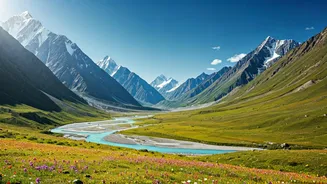
The festival is a fascinating study in contrasts. It's rooted in ancient traditions that are thousands of years old, yet it’s flawlessly executed with modern event-planning precision. It's deeply spiritual, yet vibrantly social and, yes, incredibly Instagrammable. The backdrop of Himalayan peaks and the sacred Ganges provides a timeless spiritual anchor, while the global gathering gives it a contemporary, connected feel. This fusion is perhaps the secret to its enduring success. It honors the authenticity of yoga's origins while making it accessible and relevant to a 21st-century global audience. It proves that the search for wellness isn’t just a trend, but a fundamental human need that can bridge cultures and create a powerful sense of community.