








So, What Are These Apps?
Imagine a contact in your phone, but instead of a person, it’s your bank account. You can text it things like, “How much did I spend on coffee this month?” or “What’s my biggest spending category?” and get an instant, easy-to-read reply. That’s the core
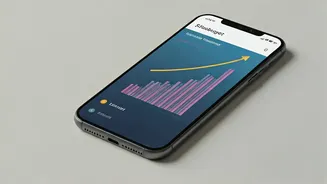
promise of conversational budgeting apps. These are mobile applications that connect securely to your financial accounts—checking, savings, credit cards—and use an AI-powered chat interface as their primary feature. Instead of navigating complex dashboards and charts, you simply ask questions in plain English. The app analyzes your transactions, categorizes them, and presents insights in a bite-sized, conversational format. It’s a fundamental shift from data entry to data inquiry, designed to feel less like accounting and more like a quick check-in.
How the 'AI' Actually Works
While the term “AI” gets thrown around a lot, in this context it’s less about a self-aware financial genius and more about sophisticated software doing two key things. First, there's Natural Language Processing (NLP), which allows the app to understand your typed questions, even if they’re phrased informally. When you ask, “Can I afford to go out tonight?” the app translates that into a query about your current balance, upcoming bills, and recent spending patterns. Second, machine learning algorithms analyze your transaction data to identify patterns. They learn to automatically categorize that $5 charge from “The Daily Grind” as “Coffee” and can spot when your spending on “Takeout” is higher than usual. Some apps even develop a “personality”—cheeky, serious, or encouraging—to make the interactions feel more engaging and less robotic.
The Appeal: Lowering the Barrier
The real magic of the conversational model isn’t just the technology; it’s the psychology. For millions of Americans who are intimidated by personal finance, the familiarity of a texting interface is a game-changer. There's no new system to learn. The friction is incredibly low. Instead of setting aside an hour on Sunday to review your budget, you can get a quick financial snapshot while waiting in line for your (categorized) coffee. This on-demand access can foster a more continuous, mindful relationship with your money. Apps like Cleo, with its sassy and sometimes roast-heavy persona, have proven that making finance fun and slightly edgy can dramatically increase user engagement, especially among younger demographics who live in their messaging apps.
The Not-So-Fine Print: Privacy and Pitfalls
Of course, this convenience comes with trade-offs. To work their magic, these apps require read-only access to your financial accounts, usually through a secure third-party service like Plaid. While these services use bank-level security, you are still handing over sensitive data. It’s crucial to read the privacy policy and understand how your information is being used, stored, and protected. Furthermore, the “AI” is not infallible. It might miscategorize a purchase or fail to understand a complex query. These apps are excellent for high-level tracking and quick insights, but they aren't a replacement for a certified financial planner or for taking a deep, personal look at your financial goals. They can tell you where your money went, but they can't tell you where it *should* go.
The Takeaway for Your Wallet
Conversational AI represents a significant evolution in consumer fintech. It strips away the intimidating veneer of personal finance and replaces it with a simple, accessible, and even entertaining user experience. For those who have struggled to stick with a budget, the text-based format can be the key to building a consistent habit of financial awareness. They are powerful tools for monitoring day-to-day cash flow and identifying spending habits you might not have noticed.