



Why Uzbekistan? Why Now?
For decades, the idea of backpacking through Central Asia felt like a pursuit reserved for only the most hardened travelers. But times have changed. Uzbekistan, the heart of the ancient Silk Road, has thrown its doors open, making it easier than ever
for independent travelers to explore its legendary cities. The appeal is obvious: where else can you stand in the shadow of turquoise-domed mosques, wander through bazaars that have buzzed for centuries, and feel like you’re discovering a destination on the cusp of discovery? Unlike overcrowded tourist hotspots, Uzbekistan offers a sense of genuine adventure, warm hospitality, and the feeling that you’re experiencing a place that hasn't yet been completely reshaped by mass tourism. The 2026 timeframe isn't about a fleeting trend; it’s about a perfect planning window to visit a country that is rapidly modernizing its tourist infrastructure while retaining its deep historical soul.
The Silk Road Trio: Samarkand, Bukhara, Khiva
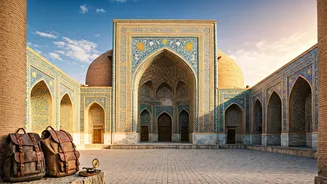
The classic Uzbek backpacking route centers on three breathtaking cities. First is Samarkand, a name that drips with history. Its centerpiece, the Registan, is an architectural marvel of towering madrasas covered in intricate tilework that glows at sunrise and sunset. It's a city of grandeur and epic scale. Next, a high-speed train whisks you to Bukhara, a city that feels more like a living museum. Its ancient, sand-colored core is a labyrinth of winding alleys, covered marketplaces, and active mosques. It’s a place to get lost, sip tea in a courtyard, and imagine the caravans that once passed through. Finally, there's Khiva, a perfectly preserved desert fortress city. Walking into its walled inner city, Itchan Kala, is like stepping back in time. With its mud-brick walls and dozens of minarets, it feels less like a city and more like a beautifully preserved movie set you can sleep in.
Is It Actually Backpacker-Friendly?
In a word: yes. The government has invested heavily in making the country accessible. For U.S. citizens, getting in is straightforward with a simple e-visa process that takes just a few days. Once there, you'll find a growing network of modern, clean, and social hostels in all major cities, often run by families. These offer not just a cheap bed (think $10-15 a night) but also a direct line into local culture. Getting around is surprisingly easy. A sleek, modern high-speed train system connects the capital, Tashkent, with Samarkand and Bukhara, making the journey comfortable, fast, and affordable. For budget travelers, Uzbekistan is a dream. A daily budget of $30-40 is very comfortable, covering a hostel bed, food, transport, and entry fees to most sites. The currency is the Uzbek som, and ATMs are now widely available in cities.
Culture, Food, and Connection
Beyond the stunning architecture, the real highlight of Uzbekistan is its people. You’ll be met with incredible hospitality and genuine curiosity. Don't be surprised if you're invited for tea or stopped for a photo. English isn't widely spoken outside the tourist industry, but a friendly attitude and a translation app go a long way. The food is a hearty, flavorful reflection of its place in the world. The national dish is 'plov,' a delicious rice pilaf cooked with meat, carrots, and onions in a giant cauldron. You’ll also find endless skewers of shashlik, savory samsa pastries, and fresh bread ('non') baked in clay ovens. The bazaars are a feast for the senses, piled high with spices, nuts, and fresh produce. It's a culture that rewards travelers who slow down and engage.