


The Great Western Visa Wall
Not long ago, the travel calculus was simple. You picked a destination, saved your money, and booked a trip. But for millions of Indians with disposable income and a desire to see the world, a frustrating new barrier has emerged: the visa appointment.
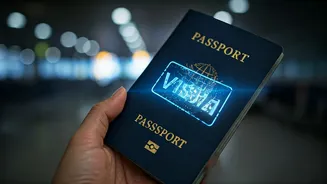
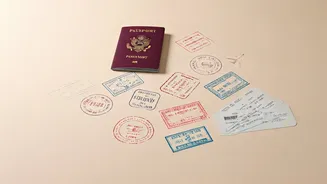
Post-pandemic, the demand for travel has skyrocketed, but the consular infrastructure of Western nations has failed to keep pace. For Indian applicants, securing a visitor visa interview for the United States can mean a wait of hundreds of days. The situation for Schengen countries in Europe isn't much better, with appointment slots becoming a scarce, almost mythical commodity. This isn't just an inconvenience; it's a structural bottleneck that’s reshaping travel decisions. Families who planned summer vacations in Europe have had their plans scuttled. Young professionals hoping for a city break in London have been forced to reconsider. The long-held dream of a Western holiday, a rite of passage for many in India's booming middle and upper classes, is now contingent on a bureaucratic lottery. This has created a massive 'push' factor, forcing travelers to ask a fundamental question: Is the destination worth the wait, the uncertainty, and the hassle?
The Southeast Asian Red Carpet
As the West has built a de facto wall of red tape, other countries have spotted an opportunity and are rolling out the red carpet. Nations across Southeast Asia, in particular, have moved aggressively to capture the diverted stream of high-spending Indian tourists. Thailand, Malaysia, and Sri Lanka have all announced temporary or long-term visa-waiver programs for Indian passport holders. Vietnam has simplified its e-visa process, making entry nearly frictionless. Other countries, from Kenya to Kazakhstan, are also simplifying their procedures. This isn't a passive change; it's an active, competitive strategy. These countries recognize the immense economic power of the Indian tourist. With a population of 1.4 billion and a rapidly expanding economy, India is poised to become one of the world's largest outbound travel markets. By removing the single biggest pain point—the visa—these nations are sending a clear message: 'We want you here, and we'll make it easy for you.' The result is a massive 'pull' effect, siphoning off travelers who are tired of being treated like supplicants by Western embassies.
The New Calculus of Travel
This dynamic has given rise to a new phenomenon: strategic travel planning. For an increasing number of Indians, the first question is no longer 'Where do we want to go?' but 'Where can we go easily?' Visa-friendliness has become a primary search filter, often outweighing a destination's historical appeal. Travel agents and booking sites now prominently feature 'visa-free' destinations. Social media groups are filled with travelers trading tips not on the best sights in Rome, but on how to secure a last-minute trip to Bali or Bangkok. This is 'visa arbitrage' on a mass scale. Travelers are consciously swapping the prestige of a photo in front of the Eiffel Tower for the guaranteed pleasure of a beach in Phuket. They are choosing the dignity of a smooth entry process over the anxiety of a visa interview. This isn't about settling for second best. It's a rational economic decision. The Indian traveler has realized their time, money, and peace of mind are valuable commodities. They are voting with their wallets, and their passports, for countries that value their business.
More Than a Vacation, It's a Barometer
This trend is more than just a travel story; it's a reflection of shifting global currents. It signifies the rising confidence and economic clout of the Indian consumer. They are no longer willing to jump through endless hoops for the privilege of spending their money abroad. It also serves as a stark warning to Western nations, including the United States. While security concerns are valid, a slow, under-resourced, and often opaque visa system acts as a powerful economic repellent. Every Indian family that opts for Thailand over California represents lost revenue in hotels, restaurants, retail, and attractions. Multiplied by the millions, this constitutes a significant economic own-goal. The world is becoming more multipolar, and that applies to tourism as well. The assumption that the U.S. and Europe are the default aspirational destinations is being tested. As Indian travelers discover the charms—and the welcome—of new places, some may never look back. The visa is no longer just a document; it's a tool of economic competition, and right now, the West is being outmaneuvered.