
So, What Is Khichdi?
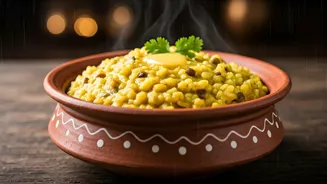
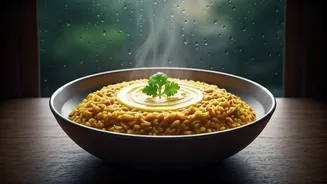
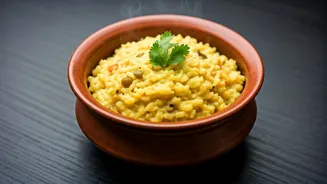
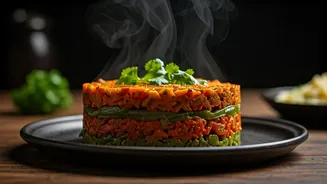
At its heart, khichdi (pronounced KICH-uh-ree) is deceptively simple: a one-pot dish made by cooking rice and lentils together until they break down into a soft, porridge-like consistency. The most common lentils used are moong dal (split yellow lentils)
because they cook quickly and are famously easy to digest. Think of it as the South Asian equivalent of risotto, congee, or polenta—a warm, savory mush that forms a base for endless variation and delivers pure, unadulterated comfort. It’s not flashy, it’s not complex, and it will never be the star of a fine-dining tasting menu. And that is precisely its power. It’s food that doesn’t demand anything from you, it only gives.
The Monsoon Connection
To understand khichdi’s reign, you have to understand the monsoon. It’s not just a bit of rain; it’s a season of dramatic, sky-opening deluges that transform the landscape and the rhythm of daily life in countries like India, Pakistan, and Bangladesh. The air becomes heavy and damp, outdoor activities grind to a halt, and a craving for something warm and restorative sets in. This is where khichdi shines. It’s a hot meal that warms you from the inside out, fighting off the damp chill. Traditionally, Ayurvedic wisdom suggests that the digestive system can be weaker during the humid monsoon months, making heavy, oily, or complex foods harder to process. Khichdi, being light and easy on the stomach, is seen as the perfect antidote. It’s a practical, soul-soothing response to the weather—a culinary hug in a bowl while thunder rumbles outside.
The Ultimate Comfort Food
Beyond the weather, khichdi’s status as a comfort food is cemented by its role as the go-to meal for nourishment and recovery. In many South Asian households, it’s the first solid food fed to babies and the primary meal given to anyone feeling under the weather. Have a cold? Mom makes you khichdi. Upset stomach? Khichdi. Feeling emotionally drained and need a reset? Khichdi. This deep-seated association with healing, care, and maternal love elevates it from mere food to a form of therapy. It’s the meal that signals you are being looked after. This emotional weight is what makes it a true “comfort” food, satisfying a need that goes far beyond simple hunger. It’s a taste of home, safety, and simplicity in a complicated world.
A Canvas for Creativity
While its basic form is minimalist, khichdi is also a wonderfully versatile canvas. The simple rice-and-lentil base is just the beginning. Almost every family and region has its own signature version. Some toast the rice and lentils in ghee (clarified butter) with whole spices like cumin seeds, cloves, and cinnamon sticks before adding water. A pinch of turmeric is almost mandatory, giving the dish its signature sunny yellow hue and a dose of anti-inflammatory goodness. In Western India, sabudana khichdi is made with tapioca pearls for religious fasting days. In Bengal, bhog'er khichuri is a richer, more celebratory version loaded with vegetables and aromatic spices, often served at religious festivals. It's almost always served with accompaniments that add texture and flavor: a dollop of ghee on top, a side of plain yogurt, a crunchy papadum, and a spoonful of spicy, tangy pickle (achaar) to cut through the creaminess. This adaptability ensures it never gets boring and can be tailored to fit any mood, from sick-day simple to weekend-project elaborate.