







What Is a Chariot Festival?
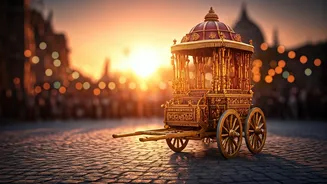
At its core, a chariot festival, or ‘Rath Yatra,’ is a public procession where deities from a Hindu temple are brought out into the streets to give ‘darshan’—a sacred viewing—to the public. Unlike a parade, this is a deeply religious event. The central
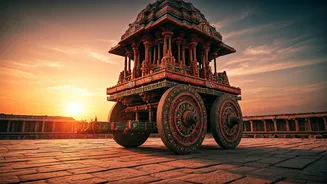
belief is that the gods themselves are journeying to visit their devotees, especially those who cannot enter the temple. The massive, elaborately decorated chariots, or ‘raths,’ are temporary, mobile temples constructed anew each year from wood, fabric, and faith. For millions of Hindus, pulling the ropes of these chariots is considered an act of immense devotion, a way to directly serve the divine and wash away sins. It's a tradition that transforms entire cities into open-air sanctuaries.
The Unrivaled Spectacle: Puri’s Rath Yatra
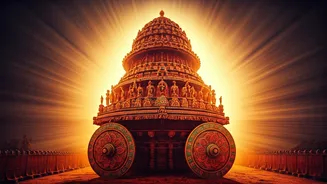
The undisputed king of all chariot festivals is the Rath Yatra in Puri, a coastal city in the eastern state of Odisha. This annual event, typically held in June or July, is dedicated to Lord Jagannath (a form of Vishnu), his brother Balabhadra, and his sister Subhadra. The sheer scale is difficult to comprehend. Three colossal chariots, built to precise ancient specifications, are pulled along a three-kilometer route by over 4,000 devotees each. The largest chariot, for Lord Jagannath, stands about 45 feet tall and rides on 16 wheels, each seven feet in diameter. The sight of these vibrant, swaying structures moving through a sea of over a million people is one of the world's most stunning religious spectacles. The air crackles with the sound of gongs, conch shells, and devotional chanting, creating an atmosphere of collective euphoria and spiritual intensity that has captivated pilgrims for centuries.
Beyond Puri: A Tapestry of Traditions
While Puri's festival is the most famous, the chariot tradition is woven into the cultural fabric of many parts of India, particularly in the south. The state of Tamil Nadu boasts numerous magnificent chariot festivals. The Tiruvarur Thyagaraja Swamy Temple, for instance, has one of the largest temple chariots in Asia, a behemoth that requires thousands of people and sometimes even bulldozers to set in motion. In cities like Madurai and Srivilliputhur, similar festivals celebrate different deities with unique local customs and chariot designs. Each festival offers a distinct window into regional art, music, and religious practices. Exploring these less-famous but equally profound events allows a traveler to see the rich diversity within this singular, powerful tradition.
More Than a Parade: The Spiritual Experience
For an American visitor, the most striking aspect of a chariot festival may not be the visual grandeur but the palpable atmosphere of ‘bhakti,’ or loving devotion. This is not a performance for tourists; it is a raw, powerful expression of faith. You will see people from all walks of life—from elderly villagers to young city dwellers—working together, chanting, and weeping with joy at the sight of the deities. The experience is immersive and participatory. The lines between spectator and participant blur as the energy of the crowd sweeps you up. It’s an opportunity to witness a form of collective spirituality that is both ancient and intensely alive, connecting the present moment to millennia of tradition.
Experiencing the Festival: Tips for Travelers
Attending a chariot festival requires preparation. First, timing is key, as they are based on the Hindu lunar calendar; check dates well in advance. Accommodations in cities like Puri are booked months, sometimes a year, ahead. For a first-timer, navigating the immense crowds can be overwhelming. Consider hiring a local guide or booking a spot on a hotel rooftop or balcony along the procession route for a safer, more comfortable vantage point. Dress modestly (covered shoulders and knees for both men and women) out of respect for the religious nature of the event. Be prepared for intense heat, humidity, and a level of sensory overload you may have never experienced. Stay hydrated, keep your valuables secure, and approach the day with patience and an open mind. This is not a passive sightseeing tour, but an active, and potentially transformative, cultural immersion.