






The Great Summer Rethink
Across India, a familiar seasonal rhythm is breaking. The period from April to June has long been peak vacation season, a time for families to escape cities and explore the country's vast cultural landscape. But as climate change intensifies, that tradition
is colliding with a dangerous new normal: relentless, record-shattering heat. This year, with temperatures soaring past 110°F (and feeling much hotter) in major hubs like Delhi and across the northern plains, a significant shift is underway. Travel agents and online booking platforms report a wave of cancellations and last-minute changes for destinations that are simply too hot to handle. Popular tourist circuits in states like Rajasthan, famous for its desert forts, or beach destinations like Goa, are seeing unusual slumps. The headline isn't just that it's hot; it's that the heat is now so extreme and prolonged that it's actively dismantling a cornerstone of the domestic leisure economy.
The Overwhelmed Escapes
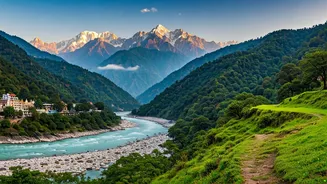
So, where is everyone going? Uphill. The mass exodus from the scorching plains has turned into a desperate migration toward the cooler Himalayan foothills. Destinations like Shimla, Manali, and Nainital—colonial-era "hill stations" designed as mountain refuges from summer heat—are experiencing a surge unlike any before. But this is not a simple solution. The infrastructure in these mountain towns was never built to handle this level of concentrated, panic-driven tourism. The result is gridlock on a massive scale. Viral videos show miles-long traffic jams snaking up mountain roads, with travelers stuck for 8-10 hours just to reach their destination. Once there, they find packed hotels, strained water supplies, and a local environment groaning under the pressure. The escape from one crisis is creating another, highlighting the cascading failures that occur when an entire population tries to flee the same threat at the same time.
An Economy Feeling the Burn
This chaotic reshuffling has significant economic consequences. For every overbooked hotel in the mountains, there's an empty one in the plains. Businesses that rely on the traditional summer tourist season—from luxury resorts in Rajasthan to humble guesthouse owners in less-elevated destinations—are facing a devastating loss of revenue. The heat isn't just a health hazard; it's a direct threat to livelihoods. The ripple effects are felt throughout the travel ecosystem, impacting taxi drivers, tour guides, restaurant owners, and artisans who depend on a steady flow of visitors. This isn't a case of tourism money simply moving from one region to another. The infrastructure bottlenecks and poor experiences in the overcrowded hills mean the overall value of the tourism season is likely shrinking, as many would-be travelers decide to simply stay home.
A Glimpse of Our Global Future
While the scale is uniquely Indian, the pattern is becoming globally familiar. What's happening in India is a dramatic preview of how climate change will reshape leisure and travel for everyone. We're already seeing it in Europe, where summer heatwaves have tourists second-guessing July trips to Rome or Athens in favor of cooler Scandinavian or Baltic destinations. In the U.S., the concept of a 'summer season' in places like Arizona, Texas, or Nevada may need a fundamental rewrite. India's experience suggests we are entering an era of 'climate-driven travel,' where the weather forecast becomes the primary factor in planning, pushing tourist seasons into the spring and fall and creating new, unpredictable hotspots. The travel industry, built on centuries of predictable seasonal patterns, is now scrambling to adapt to a world where entire regions become virtually uninhabitable for leisure for months at a time.