


The End of Beige Minimalism
For years, the gospel of interior design preached the virtues of minimalism: clean lines, neutral palettes, and wide-open spaces. But after spending more time at home than ever, many of us are craving personality, warmth, and joy. Enter the “colourful
corner.” It’s the perfect antidote to beige fatigue. This trend isn’t about painting a single wall and calling it a day. It’s a more deliberate, curated approach that treats a small, often overlooked area—the space beside a window, the end of a hallway, the inside of a closet—as its own complete scene. Think of it as a micro-dose of maximalism or a key tenet of “dopamine decor,” the design movement focused on creating spaces that make you happy. This isn't just a corner; it's a destination within a room.
Define the Space with Paint or Paper
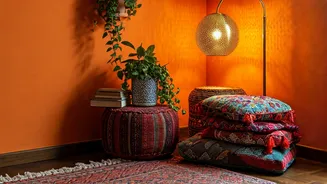
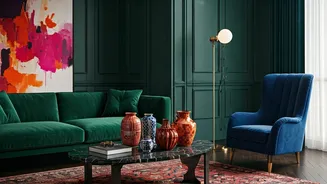
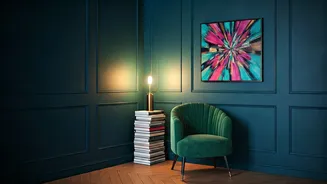
The fastest way to give your corner a distinct identity is by visually separating it from the rest of the room. A bold coat of paint is the most direct method. You can paint a dramatic arch, a geometric block of color, or even color-drench the entire nook—walls, trim, and ceiling—in a single, immersive hue. This creates a jewel-box effect that immediately draws the eye. If you’re a renter or hesitant to commit, removable wallpaper offers the same impact with less permanence. Choose a pattern that feels like a statement, whether it’s a lush botanical print, a sharp art deco design, or a whimsical toile. The goal is to create a backdrop that signals: this spot is special.
Anchor It with a Purpose
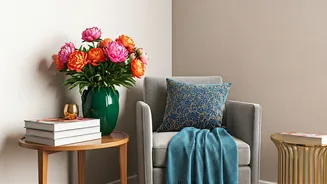
Every main character needs a motivation, and every colourful corner needs a purpose. This is what keeps it from feeling like a random collection of stuff. The function is defined by its anchor piece of furniture. Is this your new reading nook? Find a comfortable, eye-catching armchair—maybe in velvet or a bright pattern. Is it a mini-office or a creative zone? A small, stylish desk in a vibrant color or with interesting legs will set the tone. Other ideas include a chic bar cart to create a cocktail corner, a narrow console table for a mail-drop and display area, or simply a single, beautifully upholstered bench beneath a window. The furniture grounds the space and gives it a reason to exist.
Layer with Light and Texture
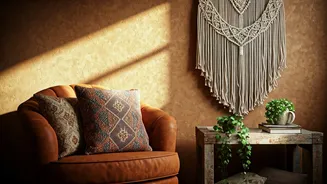
A flat corner is a forgettable one. To give your vignette depth and make it feel truly inviting, you need to layer in different textures and a dedicated light source. Lighting is non-negotiable; it puts a spotlight on your creation. A slim floor lamp arching over a chair, a sculptural table lamp on a console, or even a plug-in sconce can add ambiance and highlight your work. Then, soften the edges with textiles. A small, plush rug underfoot can help define the zone. Drape a chunky knit throw over the armchair. Add a few decorative pillows in contrasting or complementary fabrics like bouclé, silk, or linen. These tactile elements make the corner feel cozy, complete, and lived-in.
Tell a Story with Art and Objects
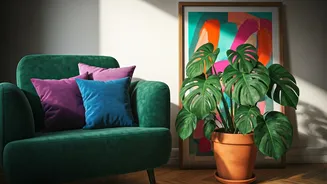
This is the final, most personal layer. If the paint is the stage and the furniture is the star, the art and objects are the supporting cast that reveals the plot. This is your chance to display the things you love. Create a tiny gallery wall with a mix of prints, photos, and postcards. Install a few floating shelves to hold your favorite books, a trailing plant, and cherished trinkets. Even the choice of bookends, a decorative tray, or a unique vase contributes to the narrative. Don't overcrowd it, but don't be afraid to let your personality shine. The best colourful corners feel like a little snapshot of who you are, making your home feel more like you.