


The Great Drainage Deception
For generations, the conventional wisdom for container gardening has been straightforward: use a pot with a hole in the bottom. For bonus points, many of us were taught to add a layer of gravel, broken pottery, or pebbles to the bottom of the pot to “improve
drainage.” It feels right. It seems logical. Unfortunately, it’s also a myth—and it’s probably been hurting your plants. The frustrating reality for millions of plant owners is that despite these measures, their plants still succumb to the dreaded effects of overwatering. The leaves turn yellow from the bottom up, the stems feel mushy, and a musty smell emanates from the soil. This is root rot, a condition where roots are suffocated and killed by a lack of oxygen in waterlogged soil. The problem isn’t that you’re a bad plant parent; it’s that the pot itself is working against you, thanks to a hidden force of physics.
Meet the Perched Water Table
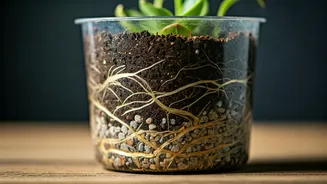
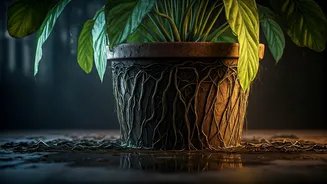
The secret enemy in your flowerpot is something called a “perched water table.” It sounds complicated, but the concept is simple. Imagine a sponge. When you dip the bottom of a dry sponge in water, the water doesn’t just stay at the very bottom; it wicks upward and saturates a certain portion of the sponge, defying gravity. The same thing happens in your pot. Even with a drainage hole, the soil at the bottom of a container will remain fully saturated with water after you irrigate. This zone of saturation is the perched water table. Water’s cohesive properties (its tendency to stick to itself) and its adhesive properties (its tendency to stick to soil particles) are stronger than the pull of gravity in this confined space. This is why adding a layer of gravel actually makes things worse. It doesn't improve drainage; it just raises the perched water table higher, forcing your plant’s roots into an even smaller volume of well-drained soil.
The Simple Genius of the Tilt
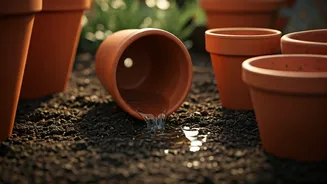
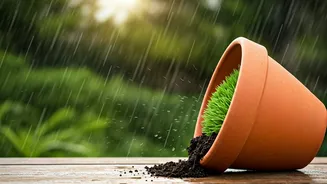
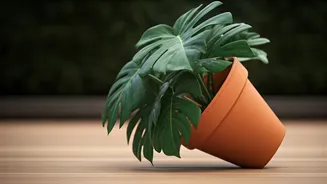
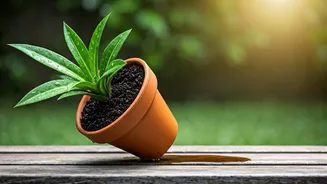
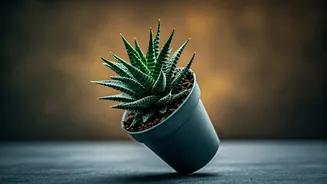
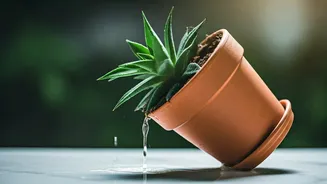
So, how do you defeat this invisible water barrier? You don’t need special soil or fancy gadgets. You just need to change the pot’s geometry. By simply tilting the pot at a 30- or 45-degree angle after watering, you dramatically change the dynamic. Tilting the pot effectively increases its “depth” relative to the force of gravity. The lowest point is now a corner of the drainage hole, not the flat bottom. This subtle shift is enough to overcome the water’s cohesive forces, allowing the excess water trapped in the perched water table to stream right out. You can often see a surprising amount of extra water drain from a pot you thought was finished dripping. By letting this excess water escape, you are reintroducing vital oxygen to the root zone and saving your plant from suffocating.
Putting the Tilt into Practice
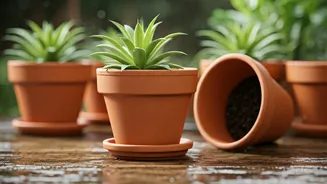
Incorporating this technique into your routine is easy. After you give your plant a thorough watering, simply prop one side of the pot up on a small object. A small stone, a piece of scrap wood, a wine cork, or a specially designed “pot foot” will do the trick. Leave it tilted for an hour or so, or until it has completely stopped dripping. For indoor plants sitting in a saucer, this is a game-changer. Tilt the pot, let the excess drain into the saucer, and then empty the saucer. You get all the benefits of a deep watering without the risk of leaving the roots in a puddle. This method is particularly life-saving for plants that are sensitive to “wet feet,” such as succulents, cacti, rosemary, and many houseplants like snake plants and ZZ plants. But honestly, almost any container-grown plant, from the herbs on your balcony to the ficus in your living room, will be healthier and more resilient with this small, simple adjustment to your watering day.