






The Art of Golden Repair
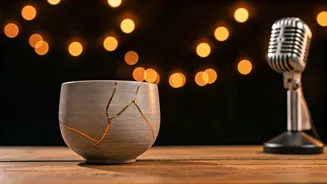
First, let’s talk about the pottery. Kintsugi, which translates to “golden joinery,” is the centuries-old Japanese art of repairing broken ceramics. But instead of trying to hide the damage, Kintsugi masters mend the pieces with a lacquer adhesive and
then highlight the cracks with a fine powder of gold, silver, or platinum. The philosophy behind it is deeply rooted in the Japanese concept of *wabi-sabi*—finding beauty in imperfection and impermanence. The breakage and repair are treated as part of the object's history, not something to be concealed. The scars become the most beautiful part of the piece, a testament to its resilience and unique journey. In a typical Kintsugi workshop, participants learn to carefully piece together their broken item, mindfully applying the lacquer and, finally, the brilliant gold powder. It’s a slow, meditative process that requires patience and a steady hand.
So, Why Add a Comedian?
On the surface, pairing this quiet, contemplative art form with the raucous energy of stand-up comedy seems bizarre. Yet, for instructors like comedian and certified Kintsugi artist Yumi Nagashima, the connection is obvious. Comedy, like Kintsugi, often finds its power in brokenness. Comedians are modern-day storytellers who take their personal traumas, social anxieties, and everyday frustrations—their own cracks—and transform them into something that creates connection and joy for an audience. A great punchline often comes from a place of vulnerability and painful truth. By weaving comedy into the workshop, facilitators create an environment where it’s safe to be imperfect. The laughter breaks the tension that can arise when confronting personal flaws, making the philosophical lesson of Kintsugi feel less like a lecture and more like a shared, human experience.
Laughter Is the Best Glue
The combination works because both activities serve a similar psychological purpose: catharsis. As attendees meticulously mend their ceramic bowls, a comedian might riff on the absurdity of perfectionism, the failures of a recent dating experience, or the universal frustration of assembling IKEA furniture. The physical act of repairing an object becomes a powerful metaphor for personal healing. The comedy acts as the social and emotional glue that holds the room together. Laughter is a physiological release; it reduces stress hormones and creates bonds between strangers. In this context, it prevents the workshop from becoming overly solemn or self-serious. It reminds participants that while acknowledging our cracks is important, so is finding the levity and joy in the messy process of being human. The goal isn't to fix yourself into a state of flawless perfection, but to learn to hold your own broken pieces with a lighter touch.
A Ritual for the Burnout Era
It’s no surprise that this trend is emerging now. In an era dominated by the curated perfection of Instagram feeds and the immense pressure to be constantly productive, an activity that explicitly celebrates flaws feels like a radical act of self-care. We are collectively exhausted from pretending to have it all together. A Kintsugi and comedy workshop offers a tangible, hands-on antidote. It provides a dedicated space to put down your phone, engage in a mindful craft, and share a genuine laugh with other people. It’s a rejection of the idea that we must hide our scars—whether physical, mental, or emotional. Instead, it offers a new script: your history, with all its breaks and repairs, is not only what makes you unique, but what makes you beautiful. The gold in the cracks isn't just for pottery; it’s a metaphor for the wisdom and resilience we gain from our hardest moments.