








A Global Holiday with Local Roots
When the United Nations established June 21st as the International Day of Yoga in 2014, it was a recognition of the practice's global appeal. But in the United States, its adoption has been particularly fervent. What started with modest gatherings in yoga
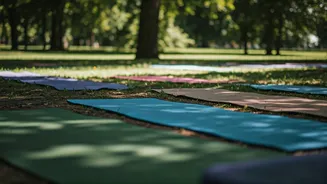
studios and community centers has exploded into major, high-profile events. The most iconic of these is the annual solstice event in Times Square, where thousands gather to practice amidst the urban chaos, a powerful metaphor for finding calm in a busy world. This growth isn't confined to New York; cities across the country now host their own large-scale public yoga sessions. This visibility serves as an annual barometer, measuring not just participation on a single day, but the mainstreaming of a practice that was once considered fringe.
The Post-Pandemic Wellness Surge
Much of yoga’s recent momentum can be traced to the seismic shifts in our priorities following the COVID-19 pandemic. Faced with unprecedented stress, isolation, and uncertainty, millions of Americans sought accessible tools for managing mental and physical health. Yoga, with its dual focus on physical postures (asanas) and mindful breathing (pranayama), was perfectly positioned to meet this need. Unlike a gym membership that requires specific equipment or a commute, yoga could be practiced in a living room with nothing more than a mat and an internet connection. The explosion of online yoga platforms and apps like Glo, Alo Moves, and Peloton Yoga democratized access, allowing people to find a practice that fit their schedule, budget, and comfort level, further cementing its place in the modern American wellness toolkit.
From Niche Pursuit to Mainstream Staple
For decades, yoga in America was often stereotyped as an activity for the hyper-flexible, the spiritually initiated, or the wealthy elite. That image is rapidly fading. Today, yoga is everywhere. It’s offered as a corporate wellness benefit in Fortune 500 companies. It’s integrated into physical education in public schools. It’s a key offering in boutique fitness studios and big-box gyms alike. This widespread integration has been a key driver of its growth. By packaging yoga as a form of stress relief, a low-impact workout, or a tool for improving focus, its benefits have been translated for a secular, results-oriented American audience. The practice has been successfully de-mystified, making it less about adopting a new belief system and more about embracing a practical method for feeling better.
An Evolving and More Inclusive Practice
The rising momentum is also fueled by a conscious effort within the yoga community to become more inclusive. The stereotypical image of a young, thin, white woman in expensive athletic wear is being actively challenged. A growing movement is pushing for greater diversity, celebrating teachers and practitioners of all ages, body types, races, and abilities. Adaptive yoga for seniors and people with disabilities, trauma-informed yoga for veterans, and body-positive classes are becoming more common. This evolution is crucial. By creating more welcoming spaces and acknowledging the diverse needs of the population, the American yoga community is expanding its reach and ensuring its relevance. This push for inclusivity isn't just about social justice; it's a core reason the practice's appeal continues to broaden rather than stagnate.