







The Underrated Grind of Getting Better
Talk to anyone deep in a recovery journey—whether from addiction, burnout, or emotional trauma—and you'll hear a common, unspoken theme: it can be incredibly boring. The process is often a repetitive cycle of self-reflection, routine-building, and consciously
avoiding old triggers and habits. While essential, this disciplined path can lack novelty and inspiration, leading to a feeling of being stuck in a gray, sterile landscape. This emotional plateau is where many people struggle. The initial motivation wanes, and the day-to-day work of healing feels less like a breakthrough and more like a chore. It’s in this space of monotony that the desire for something—anything—to feel different becomes powerful.
So, What Exactly Is Sound Healing?
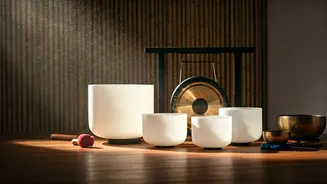
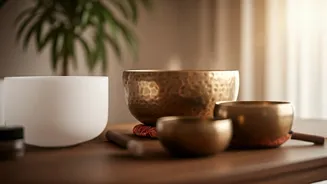
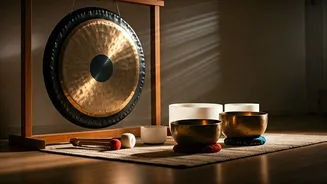
At its core, sound healing is a form of passive meditation where you simply lie down and let yourself be bathed in sound. It’s not a concert. Practitioners, often called sound healers or sound bath facilitators, use a variety of instruments known for their rich, resonant tones. These commonly include large gongs, frosted crystal singing bowls, Tibetan bowls, chimes, and tuning forks. Each instrument produces a complex tapestry of frequencies and vibrations. The goal isn't to create a melody but to generate immersive soundscapes that the mind and body can absorb. A session might start with gentle chimes, build to the powerful, shimmering vibrations of a gong, and then settle back into the pure, clear tones of a crystal bowl. You don’t have to *do* anything but listen.
A Different Kind of Nervous System Reset
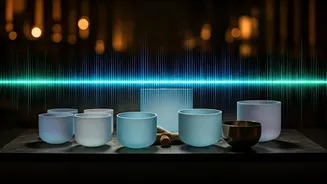
Why does lying in a room full of vibrating instruments feel so impactful? The theory behind it is based on principles like entrainment and nervous system regulation. Proponents suggest that the brain's waves can synchronize with the stable, consistent frequencies of the sounds, a process called 'auditory driving' or entrainment. This can help guide the mind from an active, often anxious Beta state to calmer Alpha or even meditative Theta states. More simply, the physical vibrations can feel like a gentle internal massage, helping to release tension stored in the body. For someone in recovery, whose nervous system may be stuck in a chronic 'fight-or-flight' mode, this experience offers a direct route to the 'rest-and-digest' state—without having to force a quiet mind through traditional meditation, which can be difficult when you’re feeling agitated.
Cutting Through the Emotional Noise
Beyond simple relaxation, sound baths provide a non-verbal space to process emotions. The intense, layered sounds can be a powerful tool for breaking through emotional numbness—a common side effect of trauma and addiction recovery. Instead of talking about a feeling, you experience it on a sensory level. The deep hum of a bowl might bring a sense of grounding, while the rising crash of a gong might help dislodge a feeling of stuckness or frustration without words. This makes it an incredibly valuable complementary tool. It’s not a substitute for therapy or medical treatment, but it offers a different language for healing. For those tired of analyzing their past, the purely somatic and present-moment nature of a sound bath can feel like a profound relief and a welcome break.
How to Dip Your Toes in the Water
Curiosity piqued? Trying sound healing is more accessible than ever. Many yoga studios and wellness centers now offer group 'sound baths,' which are a great, affordable way to experience it for the first time. Just bring a mat, a blanket, and an open mind. For a more tailored experience, you can seek out a one-on-one session with a practitioner who can focus the sounds on your specific needs. If you’re not ready for an in-person session, the internet is your friend. Platforms like YouTube and Spotify are filled with high-quality recordings of crystal bowls and gong sessions designed for sleep, meditation, or stress relief. It’s a low-stakes way to see if these frequencies resonate with you, literally.