






1. Ultimate Portability: The Go-Anywhere Shield
The most obvious advantage of a compact umbrella is its size. But 'portability' isn't just about fitting it into a bag; it's about freedom. A high-quality compact model slips effortlessly into a tote bag, a backpack's side pocket, a car's glove compartment,
or even a large coat pocket. This 'grab-and-go' readiness means you're never caught off guard. You stop making the risk-reward calculation of 'Should I lug this giant golf umbrella around just in case?' Instead, preparedness becomes an afterthought. It eliminates the problem of overpacking for a simple day trip or commute, where a bulky umbrella feels like overkill until the moment it's essential.
2. Modern Engineering: Small Size, Serious Strength
Let's bust the biggest myth: that small means flimsy. While cheap, corner-store compacts deserve their bad reputation, a well-engineered modern one is a different beast entirely. Look for models built with fiberglass ribs and shafts instead of cheap metal. Fiberglass is designed to flex under high wind pressure rather than snapping or inverting. Many top-tier compacts now feature a vented or double-canopy design. This allows wind to pass through the canopy, drastically reducing the strain and preventing the dreaded inside-out flip that leaves you exposed to the elements. These are not your grandparents' fragile folding umbrellas; they are sophisticated pieces of gear built for urban survival.
3. The One-Handed Wonder: Auto Open & Close
If you've ever fumbled with an umbrella while juggling a coffee, a phone, and a bag, you understand the magic of an automatic mechanism. Most quality compact umbrellas now feature an 'auto open/close' button. With a single press, the canopy deploys instantly. More importantly, another press collapses it, letting you get through a doorway or into a car without bringing half the storm in with you. This isn't a gimmick; it's a game-changing convenience that transforms the experience of using an umbrella from a clumsy chore into a seamless action. Once you've experienced the one-handed-deployment, going back to a manual model feels archaic.
4. Smarter Materials for a Drier Experience
The canopy itself has seen major upgrades. Premium compact umbrellas often use high-density pongee fabric treated with a Teflon or similar hydrophobic coating. This means water beads up and rolls off instantly instead of soaking into the fabric. The practical benefit is twofold: you stay drier under the umbrella, and when you collapse it, a quick shake is all it takes to get it nearly bone dry. No more dripping, soggy messes on the floor of your car, office, or entryway. It's a small detail that makes a huge difference in daily use, preventing your umbrella from becoming a portable puddle.
5. Avoiding the 'Just In Case' Clutter
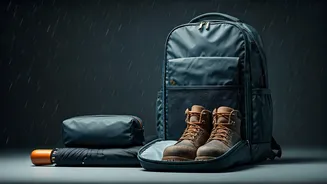
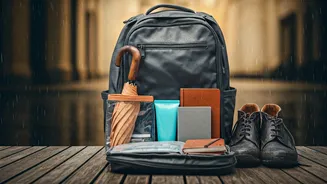
The headline mentions 'monsoon overpacking,' a perfect term for the habit of carrying bulky gear for a threat that may not materialize. A large, unwieldy umbrella is a classic example. It dictates the bag you carry and adds significant weight and awkwardness to your load. A compact umbrella solves this by being an item of 'everyday carry,' like your keys or wallet. It doesn't require a special packing strategy. Its inclusion is passive, not active. This mental shift is powerful. You're no longer 'packing for rain'; you're simply prepared for it, always. This frees up both physical and mental space, allowing you to focus on your day, not the weather forecast.