






The Reality of the Urban Footprint
To understand the rise of the sofa bed, you first have to understand the shape of New Delhi itself. As one of the world's most populous and rapidly growing megacities, physical space is the ultimate luxury. For millions of residents, home is a modest
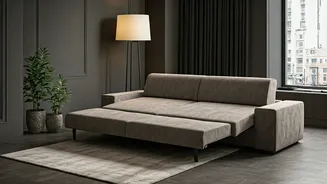
apartment in a multi-story building, where every square foot is precious. Unlike the sprawling suburban homes common in many parts of the U.S., dedicated guest rooms are a rarity. The living room is often the largest single area in the home, and it needs to work harder than ever before. A convertible sofa isn't just a piece of furniture; it's a strategic solution to a fundamental problem. It allows a single room to serve multiple purposes—a social hub by day and a comfortable sleeping space by night—without demanding a larger architectural footprint.
A Deep-Rooted Culture of Hospitality
While space is limited, the cultural emphasis on hospitality remains expansive. In India, guests are not just visitors; they are often treated with a reverence encapsulated in the Sanskrit saying "Atithi Devo Bhava" (The guest is God). It is deeply ingrained in the social fabric to welcome friends and family, often for multi-day stays. A child might move to the city for a job, but they are expected to host parents, siblings, or cousins visiting from their hometown. Rejecting a request to stay due to lack of space is culturally difficult. The convertible sofa elegantly solves this social dilemma. It allows families to uphold their duties as gracious hosts without needing a dedicated guest room they can't afford or don't have space for. It honors tradition while adapting to the constraints of modern urban life.
The Evolving Indian Family
The traditional Indian joint family system, where multiple generations live under one roof, is evolving. While more young people are forming nuclear families, the bonds of the extended family remain incredibly strong. This creates a dynamic where a household may be small on a daily basis but needs to accommodate a large group on weekends, holidays, or for family events. The living room becomes a flexible zone for cousins sleeping over or grandparents visiting for a week. The convertible sofa is the key that unlocks this flexibility, making it possible to maintain close-knit family ties even when living in separate, smaller homes. It’s a piece of furniture that acknowledges both independence and interdependence.
Aspirations Meet Smart Design
It’s a mistake to view the convertible sofa as merely a compromise. For the rising Indian middle class, it’s an aspirational purchase that signals savvy, modern living. Fueling this trend is the explosion of online furniture retailers and global brands like IKEA entering the Indian market. They offer designs that are sleek, contemporary, and a world away from the bulky, difficult-to-operate sofa beds of the past. Today's models often feature stylish fabrics, clean lines, and clever engineering. For a young professional or couple in Delhi, choosing a chic convertible sofa isn't about admitting they lack space; it’s about showcasing their ability to make smart, stylish choices that maximize both function and form within their budget. It's a reflection of a global design consciousness adapted for local needs.