






From 'Tolerated' to Truly Welcomed
There’s a world of difference between a place that allows dogs and a place that welcomes them. For decades, pet owners have navigated a landscape of compromise: searching for the lone trash can on a long walk, hoping for a stray water fountain, and tethering
their pup to a parking meter while running into a store. That era of dogs being merely tolerated is fading. Today, the concept of a 'pet-friendly walk' is being redefined by intentional design. Driven by the 'pet humanization' trend—where pets are increasingly seen as integral family members—Americans are seeking communities that cater to their entire household, paws and all. This isn't just about avoiding 'No Dogs Allowed' signs; it's about discovering spaces built with a dog's needs and a dog owner's convenience at the forefront.
The Economics of Happy Paws
This shift isn’t just about warm feelings; it’s rooted in smart economics. With nearly 70% of U.S. households owning a pet, catering to this demographic is a powerful way for businesses and municipalities to drive foot traffic and build loyalty. Real estate developers are finding that pet amenities are a major draw for potential homebuyers and renters, who are willing to pay a premium for communities that feature dog parks, washing stations, and accessible walking trails. Similarly, outdoor shopping centers and main street associations have realized that welcoming dogs means their owners will linger longer, visit more frequently, and spend more money. A dog-friendly patio isn't just an accommodation; it's a business strategy that turns a quick coffee run into a leisurely afternoon.
The Anatomy of a Great Pet Walk
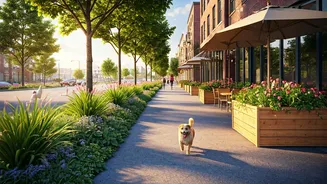
So what elevates a simple sidewalk into a genuinely thoughtful pet-friendly experience? It's all in the details. These purpose-built spaces go far beyond a token patch of grass. The best examples integrate a suite of amenities that show a deep understanding of a dog owner's journey. Look for conveniently placed waste stations that are always stocked with bags. Notice the integrated water fountains, often featuring a ground-level bowl for thirsty pups. You'll see designated 'paw-king' spots—secure, shaded tie-up areas outside shops where you can safely leave your dog for a minute. Retailers might have a water bowl by their entrance or a jar of treats on the counter. The walking paths themselves are often wider, made of paw-friendly materials, and feature ample shade and seating for rest breaks. Some of the most ambitious designs even weave small, fenced-in dog runs or agility courses into the larger landscape of a park or commercial district.
Where to Find These Pet Paradises
While this trend is growing nationwide, some areas are leading the pack. Cities known for their outdoor culture, like Austin, Denver, and San Diego, have long been ahead of the curve, with businesses and parks departments collaborating on pet-centric infrastructure. But the most interesting developments are happening in planned communities and revitalized urban cores. In places like The Domain in Austin or Assembly Row in Somerville, Massachusetts, the entire retail experience is built around a walkable, open-air model where dogs are expected and welcomed. These aren't just malls; they are community hubs where people gather, shop, dine, and live, often with their dogs right beside them. Even smaller towns are getting in on the act, realizing that a dog-friendly downtown can be a key differentiator in attracting both tourists and new residents.