





The Deception of Standing Water
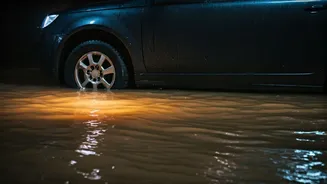
The single most dangerous miscalculation people make in the rain happens behind the wheel. You see a flooded street ahead and think, “It’s just a big puddle. I can make it.” This is often a fatal assumption. The National Weather Service’s “Turn Around,
Don’t Drown” campaign was created for this exact reason. It only takes about six inches of water to reach the bottom of most passenger cars, causing loss of control and possible stalling. Just one foot of water can float many vehicles. Two feet of rushing water can sweep away most vehicles, including SUVs and pickups. The problem isn't just the depth; it's what you can't see. That water obscures washed-out sections of road, debris, or open manholes. What looks like a shallow crossing could be a deep trap. Hydroplaning is another risk. At speeds as low as 35 mph, new tires can lose contact with the road in as little as one-tenth of an inch of water. The safest decision is always the one that feels like an overreaction: stop, turn around, and find another route.
An Invisible Soup of Hazards
For kids, and even some adults, splashing in rain puddles seems like a harmless rite of passage. But floodwater is profoundly different from clean rainwater. When storm drains are overwhelmed, the resulting runoff is a toxic mix of everything it has touched. This can include raw sewage from overflowing sewer systems, agricultural waste and pesticides from farms, chemicals and gasoline from roadways, and dangerous bacteria like E. coli and tetanus. According to the Centers for Disease Control and Prevention (CDC), direct contact with contaminated floodwater can cause skin rashes, wound infections, and gastrointestinal illnesses. If you have any open cuts or sores, they can become portals for infection. The advice is simple and absolute: do not walk, wade, or allow children to play in floodwater. If you accidentally come into contact with it, wash the affected area with soap and clean water as soon as possible.
The Unseen Force of Moving Water
We tend to underestimate the power of water because we’re used to it being placid and controllable. But moving water is a force of nature that follows the laws of physics, not intuition. Flash floods are the number one weather-related killer in the United States, primarily because people don’t respect the force of even a small current. Fast-moving water that’s only six inches deep can knock an adult off their feet. The pressure that water exerts increases exponentially with its speed. A current moving at just 6 mph exerts the same pressure per unit area as wind blowing at EF5 tornado speeds. You can’t out-muscle it or out-smart it. This is why first responders are so adamant about staying away from flooded creeks, drainage ditches, and low-lying areas during and after heavy rainfall. The situation can change from manageable to life-threatening in seconds.
Dangers That Linger After the Storm
Even after the rain stops and the clouds part, the risks associated with water remain. Downed power lines are a major concern. If a line falls into a puddle or standing water, the entire body of water can become electrified. Never approach standing water near fallen utility poles. Another post-storm danger is the structural integrity of what’s underneath the water. A bridge or culvert that looks fine may have had its foundations eroded by the flood, making it unstable and prone to collapse. This is another reason why driving through standing water on roads is so perilous—the road itself may no longer be there. Always treat any area that has been flooded with extreme caution until authorities have deemed it safe.