




The Next 'It' Fruit?
While calling any food a “superfood” is more of a marketing term than a scientific one, some fruits and vegetables justifiably earn the hype. Think of how avocado toast defined the 2010s or how kale became a staple. The persimmon has all the makings of the next
star. Its unique, honey-like flavor with hints of cinnamon and apricot sets it apart from the usual berry-and-banana rotation. It’s also incredibly versatile, beautiful to look at, and—most importantly—a nutritional powerhouse. As consumers continue to seek out novel flavors and nutrient-dense ingredients, the persimmon is perfectly positioned to move from a niche autumn treat to a year-round pantry essential. Getting familiar with it now means you’ll be an expert when everyone else is just catching on.
Know Your Persimmons: Fuyu vs. Hachiya
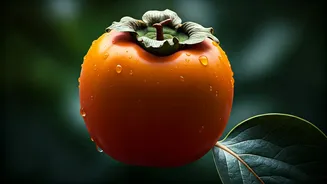
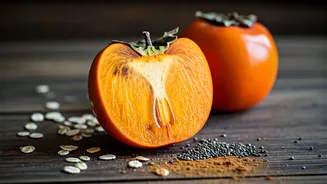
Walking into a grocery store and grabbing the wrong persimmon can lead to a memorably unpleasant, mouth-puckering experience. Understanding the two most common varieties is key to enjoying them. First is the Fuyu, which is squat, firm, and shaped like a tomato. Fuyus are non-astringent, meaning you can eat them when they are still firm and crisp, much like an apple. They’re perfect for slicing into salads, dicing into salsas, or arranging on top of a yogurt bowl. The second is the Hachiya, which is larger, heart- or acorn-shaped, and highly astringent until it’s completely ripe. You must wait until a Hachiya is jelly-soft to the touch—so soft you feel like it might burst. At that point, its astringency vanishes, revealing a custardy, sweet pulp that’s ideal for blending into smoothies, puddings, or baking batters. Rule of thumb: if it's firm and you want to eat it now, grab a Fuyu. If you have patience, a Hachiya is your reward.
A Truly Super Nutrient Profile
So, what’s inside this vibrant orange fruit that makes it so special? Persimmons are an excellent source of Vitamin A, which is crucial for vision, immune function, and cellular health. A single persimmon can provide a significant portion of your daily recommended intake. They are also packed with Vitamin C, a powerful antioxidant that helps protect your cells from damage and supports skin health. Beyond vitamins, persimmons offer a healthy dose of manganese, an essential mineral for bone health and metabolism, as well as a good amount of dietary fiber. This fiber content aids in digestion, helps you feel full and satisfied, and can contribute to stable blood sugar levels. This combination of antioxidants, vitamins, and fiber is what gives the persimmon its “superfood” credentials and makes it a smart addition to any diet.
Building the Perfect Persimmon Bowl
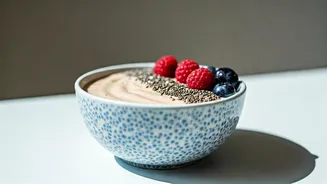
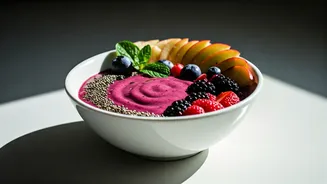
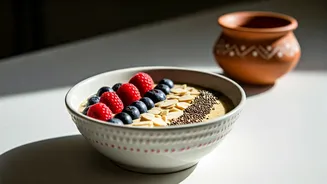
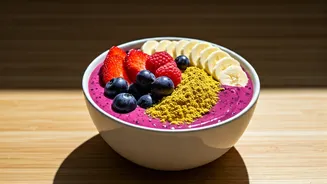
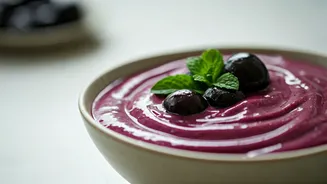
Ready to put persimmons to work? Their natural sweetness makes them a perfect addition to breakfast bowls and healthy desserts. For an instant upgrade to your morning routine, try these simple ideas. For a Yogurt or Oatmeal Bowl, thinly slice a crisp Fuyu persimmon and arrange the pieces on top of Greek yogurt or warm oatmeal. Add a sprinkle of cinnamon, a drizzle of maple syrup, and a handful of toasted pecans for texture. To create a vibrant Smoothie Bowl, blend the jelly-like pulp of a very ripe Hachiya persimmon with a frozen banana and a splash of almond milk until smooth and thick. Pour it into a bowl and top with granola, coconut flakes, and chia seeds. For an elegant Chia Seed Pudding, simply stir Hachiya pulp into your prepared pudding for a layered, parfait-style treat. The persimmon’s smooth texture and sweet flavor require no extra sugar, just pure, delicious fruit.