




A Bridge Grown, Not Built
In the remote, rain-soaked hills of Meghalaya in northeast India, the local Khasi and Jaintia peoples have developed a form of architecture that is both breathtaking and radically patient. For centuries, they have guided the aerial roots of the Indian
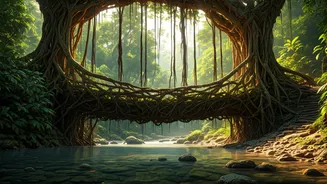
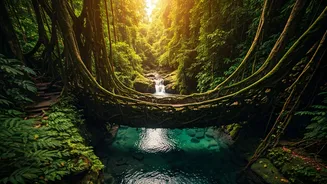
rubber tree (*Ficus elastica*) across rivers and ravines, weaving them into sturdy, living bridges. This isn't construction; it's a multigenerational collaboration with nature. A young root bridge is started by training roots through hollowed-out betel nut trunks to guide their growth in the right direction. Over 15 to 30 years, the roots thicken and fuse together, creating a structure that is not only functional but becomes stronger over time, withstanding the region’s powerful monsoons that would wash away conventional wooden or bamboo bridges.
The Journey to a Double-Decker Wonder
While there are dozens of these bridges scattered throughout the region, the undisputed icon is the Jingkieng Nongriat, the famous double-decker living root bridge. Reaching it is the core of the adventure promised in any traveler’s diary. The journey begins with a descent of over 3,500 stone steps down a steep valley to the small village of Nongriat. The trek is demanding, a true test of endurance through humid jungle, across smaller root bridges and rickety suspension wires. But the reward is staggering: two perfectly formed bridges, one stacked atop the other, spanning a turquoise river. The lower bridge is ancient, while the upper level was added as water levels rose. It’s a jaw-dropping sight, a piece of organic architecture that feels like it was pulled from a fantasy novel.
More Than Just a Photo Op
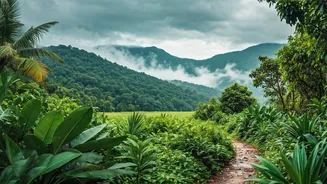
The trek itself is what elevates this from a simple sightseeing trip to a genuine adventure. The humidity is intense, the steps are relentless, and your muscles will ache. But this physical challenge is part of the experience. It strips away the casual tourism and forces a deeper connection with the environment. You’re not just observing the landscape from a car window; you are fully immersed in it. Along the way, you’ll pass waterfalls cascading into crystal-clear pools that offer a welcome, chilly respite from the jungle heat. The journey filters out the crowds, ensuring that those who arrive have earned the view. It’s a pilgrimage for nature lovers, where the destination and the journey are inextricably linked.
A Lesson in Patience and Sustainability
The living root bridges are more than just a clever bit of bio-engineering; they are a profound statement about a different way of thinking. In a world obsessed with quick fixes and disposable goods, these bridges are a testament to patience, foresight, and symbiosis. The Khasi people who cultivate them are not thinking about next quarter’s results, but about the next generation. These structures don’t decay; they grow. They don’t fight nature; they are a part of it. They provide a vital lifeline for remote communities while hosting their own miniature ecosystems of moss, ferns, and insects. Visiting them is to witness a philosophy made tangible—a belief that humanity’s greatest creations can work in harmony with the natural world, rather than in opposition to it.