









Meet the Micro-Office
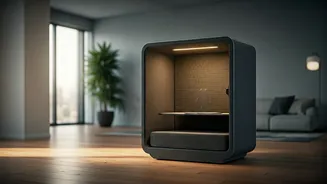
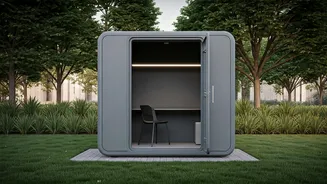
First, let's clarify what we're talking about. While 'foldaway study pod' brings to mind something you might collapse and store in a closet, the reality is a bit more substantial—and strategic. Think of them as high-tech, single-occupant micro-offices.
These aren't just the phone booths you see scattered around open-plan headquarters for a quick private call. Instead, they are standalone, soundproofed enclosures equipped with a desk, chair, power, lighting, and reliable Wi-Fi. Companies like Framery, Zenbooth, and Room have popularized the in-office version, but a new application is emerging: placing these pods *outside* the central office. The vision is to create a distributed network of workspaces in residential buildings, suburban co-working hubs, or even repurposed street-level retail spaces, offering employees a professional environment without the grueling journey to a central downtown location.
The Real Target: Commute and Concentration
The headline claim that these pods 'eliminate' commute stress is bold, but it gets to the heart of the problem they aim to solve. The average American commute hovers around 27 minutes each way, a figure that skyrockets in major metropolitan areas. This daily grind is a well-documented source of chronic stress, lost productivity, and diminished well-being. While working from home eliminates the commute, it introduces its own set of challenges: distractions from family, pets, or chores; inadequate desk setups leading to physical strain; and a psychological blurring of the lines between personal and professional life. The hyper-local work pod attacks both problems at once. It drastically cuts travel time down to a walk or a short drive, while simultaneously providing a dedicated, distraction-free 'third space' that allows for the mental separation of work and home.
The 'Third Space' Advantage
Sociologists have long talked about the importance of 'third spaces'—places outside of home (the first space) and work (the second) where community and connection happen. Think coffee shops, libraries, and public parks. In the context of modern work, the neighborhood pod offers a new kind of third space, one specifically designed for productivity. It provides the structure of an office without the associated politics or long commute. For employees, this short 'psychological commute' to a nearby pod can be incredibly powerful. It creates a ritual that signals the start and end of the workday, helping to restore the work-life boundaries that evaporated for many during the pandemic. It’s an escape from the laundry pile and the barking dog, offering a quiet sanctuary for deep focus that can be difficult to find either at home or in a bustling central office.
Why Companies Are Investing
From a corporate perspective, this isn't just a pricey employee perk. It’s a strategic response to the new realities of the talent market and commercial real estate. In the war for talent, flexibility is paramount. Offering access to a network of local work pods can be a powerful differentiator, attracting and retaining employees who demand flexibility but also need a dedicated workspace. It’s a compelling compromise in the return-to-office debate. Furthermore, companies are rethinking their real estate footprints. Why pay for tens of thousands of square feet in a premium downtown tower that sits half-empty three days a week? A 'hub-and-spoke' model, with a smaller central hub for collaborative events and a network of distributed pods for focused individual work, can be a more cost-effective and employee-friendly solution. It allows companies to recruit from a wider geographic area without requiring everyone to move or endure a painful commute.